
Engineering Solutions for Challenging Industrial Effluents
Industrial wastewater is becoming increasingly complex as chemical, pharmaceutical, specialty chemical, agrochemical, and manufacturing processes generate effluent streams with high Total Dissolved Solids (TDS), COD, dissolved salts, organic compounds, solvents, and process-specific contaminants.
Conventional wastewater treatment technologies are often designed primarily for reducing suspended solids, organic load, or biodegradable contaminants. When dissolved salts and high TDS become the dominant challenge, additional treatment technologies are required to achieve water recovery and discharge compliance.
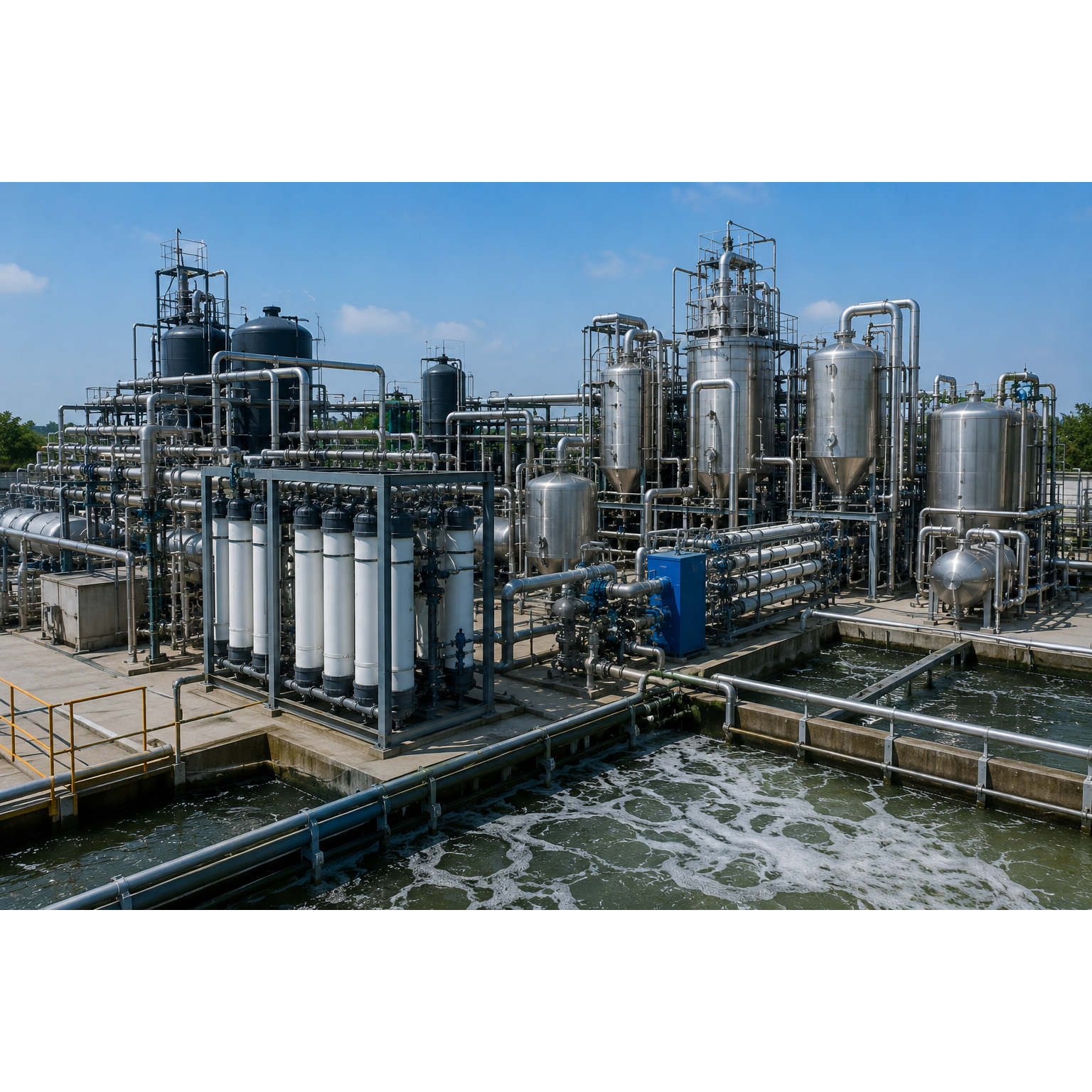
CentPro Engineering Pvt. Ltd. develops integrated high-TDS wastewater treatment solutions combining membrane separation, evaporation, crystallization, condensate recovery, and solvent recovery technologies. Our process engineering approach is based on the actual characteristics of the wastewater, allowing the treatment system to be configured according to feed chemistry, recovery requirements, utility availability, and desired final water quality.
Understanding High-TDS Industrial Wastewater
TDS represents the concentration of dissolved substances present in water, including inorganic salts, minerals, chemical residues, and other dissolved compounds. High-TDS wastewater can create significant challenges for conventional treatment systems.
As TDS increases, industries may experience:
- Difficulty in achieving conventional biological treatment
- Scaling and fouling of equipment
- Corrosion of process equipment
- Increased wastewater disposal costs
- Reduced membrane performance
- Higher freshwater consumption
- Challenges in meeting discharge requirements
For these applications, thermal concentration and advanced membrane technologies can provide an effective route toward water recovery and waste minimization.
CentPro's Integrated Treatment Approach
High-TDS wastewater treatment is rarely solved by a single technology. The most effective solution often involves combining multiple treatment stages, with each technology performing a specific role.
A typical integrated treatment train may include:
Effluent Collection → Pretreatment → UF → RO → Evaporation → Crystallization → Solid-Liquid Separation → Water Recovery
Depending on the wastewater characteristics, additional systems such as MEE, MVR, forced circulation evaporators, condensate polishing, solvent recovery, and crystallizers can be integrated into the process.
Membrane-Based Treatment
Reverse Osmosis and Ultrafiltration can be used as upstream treatment technologies to remove suspended solids and recover a significant portion of usable water before the high-TDS stream enters thermal treatment.
This approach can reduce the volume requiring evaporation and, consequently, reduce the overall thermal energy requirement of the ZLD system.
Thermal Evaporation for High-TDS Streams
When dissolved solids exceed the practical operating limits of conventional membrane systems, evaporation becomes an important treatment stage.
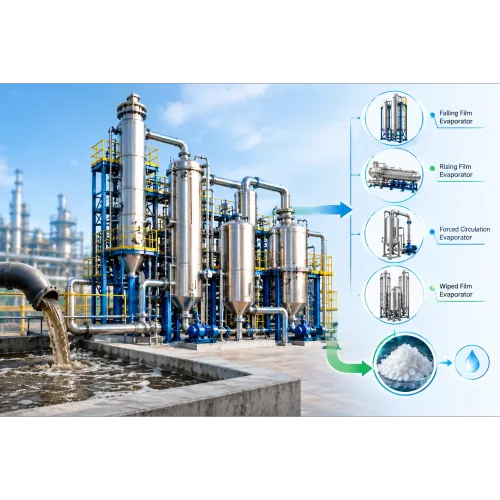
CentPro can engineer different evaporation configurations depending on the wastewater characteristics, including:
- Multiple Effect Evaporators (MEE)
- Falling Film Evaporators
- Forced Circulation Evaporators
- Rising Film Evaporators
- Mechanical Vapor Recompression (MVR) Systems
- Hybrid MEE-MVR Systems
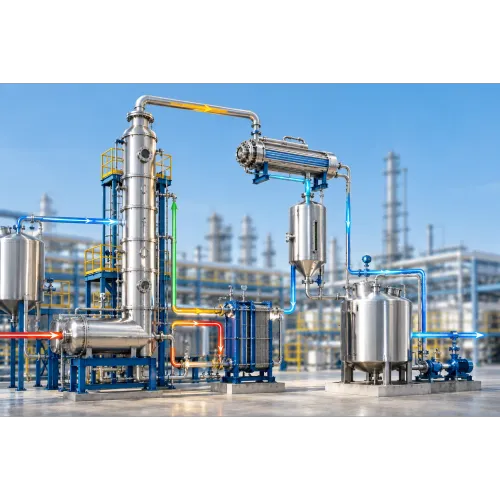
These systems concentrate wastewater while recovering the generated vapor as condensate for potential reuse after appropriate polishing.
Crystallization for Final Concentrate Management
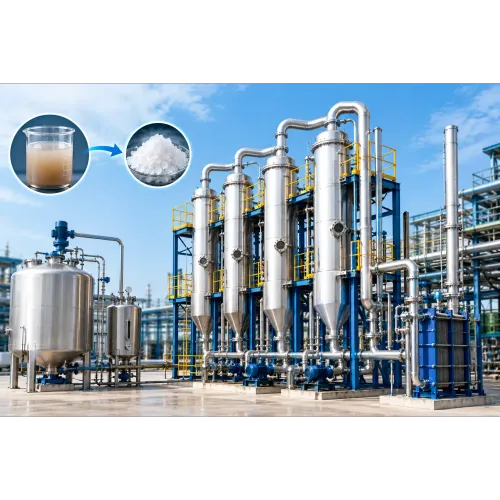
As evaporation progresses, the dissolved solids in the concentrate increase until the solution approaches saturation. Further concentration can result in crystal formation.
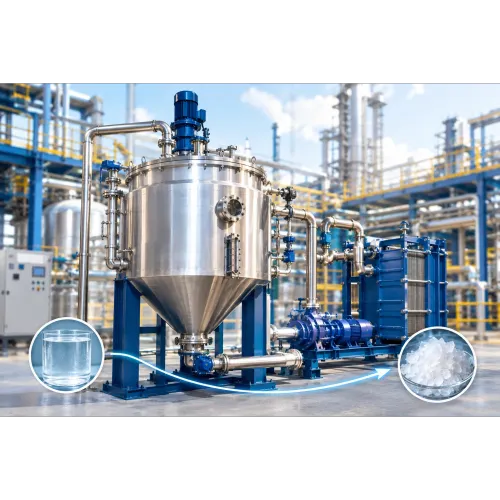
Industrial crystallizers can then be used to convert dissolved salts into solid crystals, allowing separation and downstream handling.
This makes crystallization particularly important in Zero Liquid Discharge (ZLD) applications where the objective is to eliminate liquid discharge from the facility.
Solvent-Bearing Wastewater
Certain chemical and pharmaceutical wastewater streams contain solvents along with high levels of dissolved solids. Such streams require careful process selection because solvents can influence evaporation behavior, equipment metallurgy, safety requirements, and condensate quality.
Where technically and economically viable, solvent recovery and distillation systems can be integrated with the wastewater treatment process to recover valuable solvents while reducing waste.
This approach can provide both environmental and economic benefits by reducing fresh solvent consumption and hazardous waste generation.
Treatment Capabilities
CentPro's high-TDS wastewater treatment solutions can be engineered for:
- High-salinity industrial wastewater
- High-TDS RO reject
- Chemical process effluent
- Pharmaceutical wastewater
- API manufacturing effluent
- Solvent-bearing wastewater
- Concentrated mother liquors
- Textile and dyeing wastewater
- Specialty chemical effluents
- Agrochemical wastewater
- Concentrated brine streams
- ZLD applications
Key Engineering Considerations
Every high-TDS wastewater treatment project requires detailed process evaluation before selecting the treatment configuration.
CentPro considers parameters such as:
- TDS concentration
- COD and BOD
- pH
- Chloride and sulphate levels
- Silica concentration
- Hardness
- Organic content
- Solvent concentration
- Scaling potential
- Fouling tendency
- Feed flow rate
- Required water recovery
- Final concentrate characteristics
- Steam and electricity availability
- Required automation level
This process-specific approach helps avoid overdesign, excessive energy consumption, and operational problems.
Benefits of Integrated High-TDS Treatment
A properly engineered system can help industries achieve:
- Higher wastewater recovery
- Reduced freshwater consumption
- Lower liquid waste generation
- Reduced wastewater disposal costs
- Improved environmental compliance
- Recovery of reusable condensate
- Reduced overall effluent volume
- Potential recovery of valuable solvents or salts
- Better integration with ZLD systems
- Improved long-term process sustainability
High-TDS Treatment and Zero Liquid Discharge
High-TDS wastewater treatment is closely associated with the development of Zero Liquid Discharge systems. In a ZLD configuration, wastewater is progressively concentrated until the remaining dissolved solids can be recovered or managed as a solid residue.
CentPro can integrate RO, UF, MEE, MVR, forced circulation evaporation, crystallization, condensate recovery, and automation to develop customized ZLD solutions for challenging industrial effluents.
The objective is not simply to treat wastewater but to maximize water recovery, minimize waste volume, optimize energy consumption, and improve overall resource utilization.
Why CentPro for High-TDS Wastewater Treatment?
CentPro Engineering combines process engineering, thermal separation technology, equipment manufacturing, automation, and turnkey project execution to provide integrated industrial wastewater solutions.
Our capabilities allow us to address the complete process—from wastewater characterization and process design to equipment manufacturing, system integration, installation, commissioning, and technical support.
For industries dealing with increasingly difficult effluent streams, the right treatment strategy can transform wastewater management from a disposal challenge into an opportunity for water recovery, resource conservation, and sustainable plant operation.