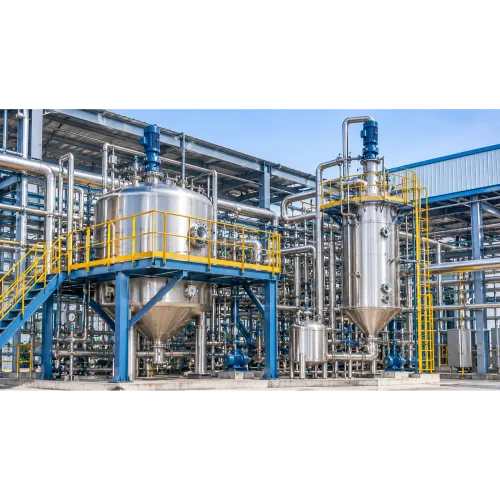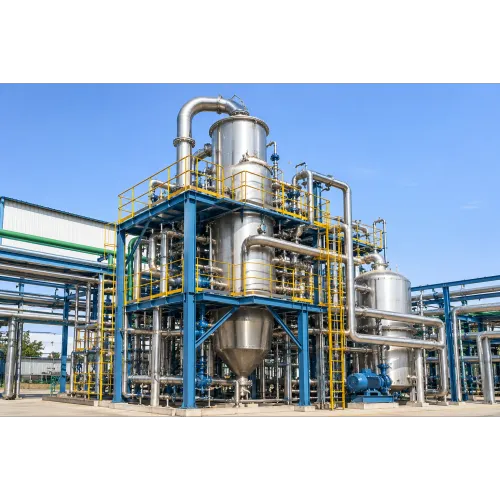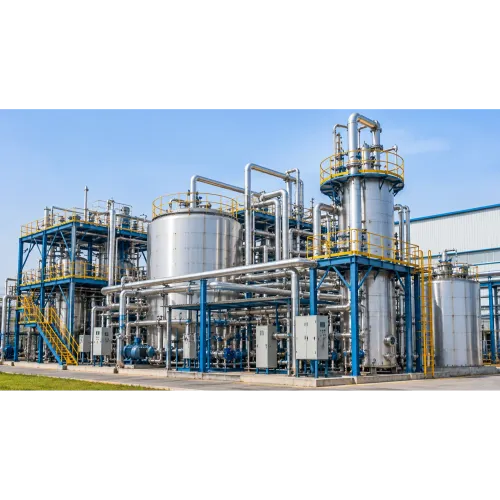

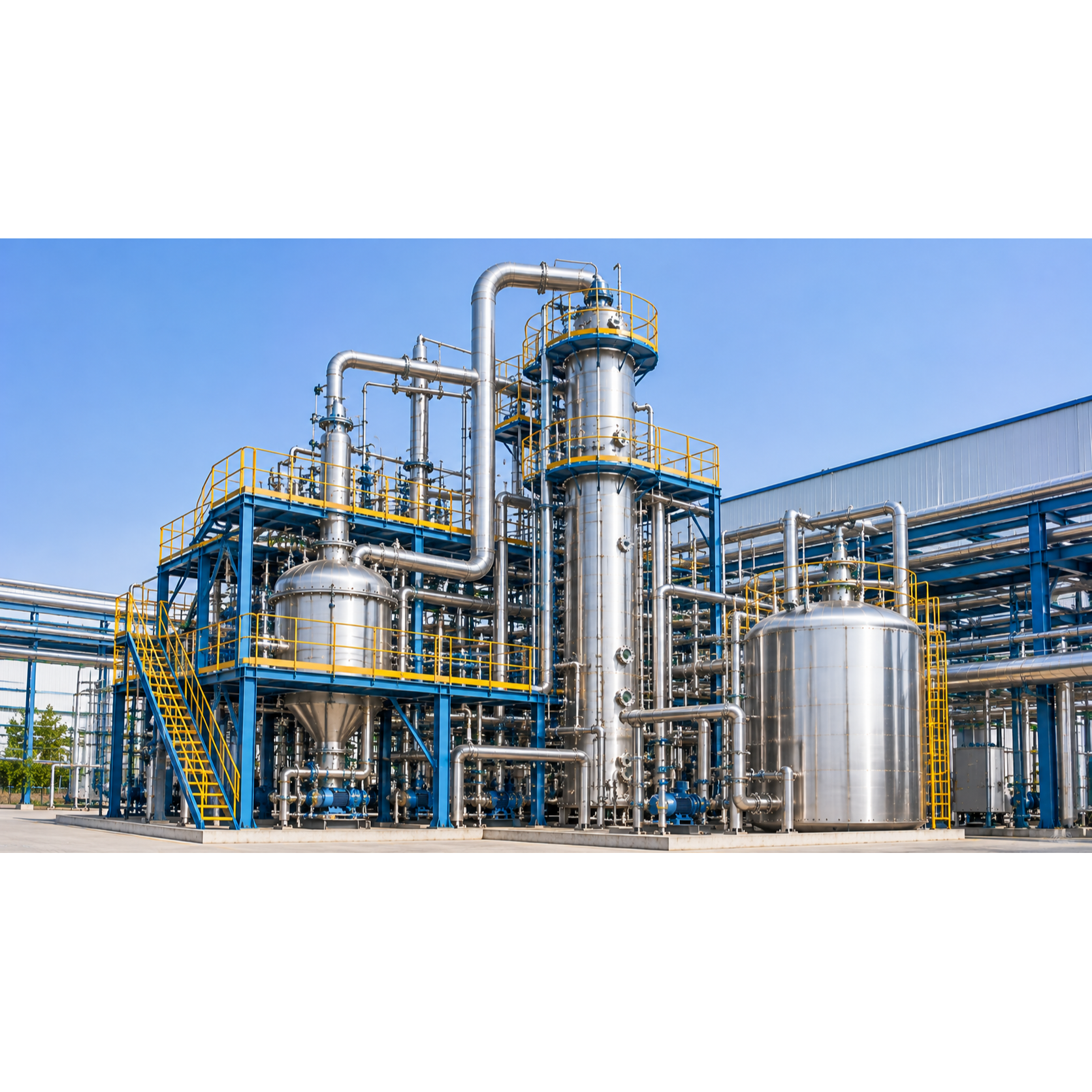
Distillation is widely used in specialty chemical manufacturing to separate, purify and recover components from liquid mixtures based on differences in volatility. It plays an important role in solvent recovery, intermediate purification, chemical processing and the production of high-purity materials.
The choice between batch and continuous distillation affects production flexibility, separation performance, energy consumption, operating labour and plant utilisation. Batch distillation processes a defined quantity of feed over a specified operating cycle, while continuous distillation processes feed and withdraws product streams during sustained operation.
For specialty chemical manufacturers handling multiple products, variable feed compositions or high-purity requirements, selecting the right distillation arrangement is an important process design decision.
Batch distillation is generally suited to flexible, campaign-based production, while continuous distillation is often preferred for stable, high-volume production. The right choice depends on product variety, separation requirements, throughput and the economics of the complete process.
1. What Is Batch Distillation?
In batch distillation, a fixed quantity of liquid feed is charged into a reboiler or distillation vessel. The mixture is heated, generating vapour that passes through a distillation column or separation arrangement before being condensed and collected.
As distillation progresses, the composition of the liquid remaining in the vessel changes. Consequently, the composition of the overhead vapour and collected distillate may also change over time. Operators may collect different fractions separately to meet product specifications.
Batch distillation is commonly considered for specialty chemicals, fine chemicals, pharmaceutical intermediates and solvent recovery applications where production requirements vary between campaigns.
Key characteristics include:
Flexible production: Different products or feed mixtures can be processed using the same equipment when materials, cleaning and operating conditions are compatible.
Adjustable operating conditions: Reflux ratio, heating duty, pressure and fraction collection can be changed during a batch where the design permits.
Fraction-based separation: Different cuts can be collected as the composition changes during operation.
Campaign-based scheduling: Charging, distillation, discharge and cleaning occur in separate stages.
Variable product composition: Maintaining specifications may require careful control of operating conditions and fraction collection.
Batch distillation offers operational flexibility, but cycle duration, cleaning requirements and changing product composition can limit production capacity.
2. What Is Continuous Distillation?
In continuous distillation, feed enters the system at a controlled rate while overhead and bottom products are withdrawn during normal operation. A distillation column contains internal contacting equipment, such as trays or structured or random packing, that supports vapour-liquid mass transfer.
The feed is introduced at a suitable location in the column. Vapour moves upward while liquid flows downward, allowing components to separate according to their volatility and the operating conditions. The overhead stream is condensed, and part may be returned as reflux to improve separation. The bottom stream is withdrawn under controlled conditions.
Continuous distillation is often suitable for large production volumes, stable demand and processes requiring consistent product quality over extended operating periods.
Key characteristics include:
Sustained throughput: Feed processing and product withdrawal take place during operation.
Steady-state separation: Temperature, pressure, reflux and feed conditions are controlled to maintain the required separation.
Consistent product quality potential: Stable feed and operating conditions support repeatable product specifications.
Process integration: Feed preparation, heat recovery and downstream equipment can be integrated into a continuous production train.
Higher start-up and shutdown considerations: Establishing stable column conditions and managing transitions can require careful planning.
Continuous distillation can provide high production capacity, but it requires reliable utilities, feed control, instrumentation and operating procedures.
3. Batch vs Continuous Distillation: Key Differences
| Selection factor | Batch distillation | Continuous distillation |
|---|---|---|
| Production pattern | Defined batches or campaigns | Sustained operation |
| Product variety | Well suited to multiple compatible products | Often best suited to one product or a limited range |
| Throughput | Depends on batch size and cycle time | Suitable for high, sustained production rates |
| Feed composition | Can accommodate changing feed batches with appropriate adjustments | Works best with predictable feed; disturbances require process control |
| Product composition | Can change during the batch; fractions may be collected separately | Can maintain relatively stable product specifications at steady state |
| Process control | Batch recipes, reflux, heating duty and fraction cuts | Continuous control of feed, reflux, pressure, temperature and product withdrawal |
| Changeover | Cleaning and preparation may be required between campaigns | Product changeovers can be more complex and may require transition management |
| Equipment utilisation | Includes charging, discharge and cleaning periods | Can provide high utilisation during sustained production |
| Energy performance | Depends on batch cycle, heat recovery and operating strategy | Can benefit from continuous heat integration and stable operation |
| Typical application | Specialty chemicals, fine chemicals and solvent recovery | High-volume solvent purification and continuous chemical production |
Neither arrangement is universally superior. The preferred configuration depends on the feed mixture, required purity, relative volatility, production schedule and total operating cost.
4. Production Flexibility and Product Changeovers
Production flexibility is often the first consideration for specialty chemical plants.
A batch distillation system can process different compatible mixtures in separate campaigns. Operating conditions can be adapted to the composition of each feed, and different fractions can be collected according to the required specifications. This can be particularly useful when product demand fluctuates or when a manufacturer produces multiple grades of an intermediate.
Continuous distillation is generally more straightforward when the feed composition and production demand remain stable. However, switching between products may require changes to operating conditions, management of off-specification transition material and, in some cases, cleaning or equipment modifications.
The decision should account for the actual frequency of product changes. A plant processing several products in short campaigns may benefit from batch operation, while a plant producing a consistent solvent stream throughout the year may find continuous operation more suitable.
5. Separation Efficiency and Product Purity
Distillation performance depends on the vapour-liquid equilibrium of the mixture, relative volatility, operating pressure, reflux ratio, number of theoretical stages, feed condition and column design.
In batch distillation, the liquid composition changes as the more volatile components are removed. The operating strategy may need to change during the cycle to maintain the desired product purity or separate multiple fractions. For close-boiling mixtures, suitable fractionation and reflux control are particularly important.
In continuous distillation, separation is established through the interaction of vapour and liquid across the column under controlled operating conditions. With an appropriate design and stable feed, the column can maintain consistent overhead and bottom product specifications.
For both systems, azeotropes, close-boiling components and thermally sensitive compounds may require additional consideration. Depending on the mixture, pressure-swing distillation, extractive distillation, azeotropic distillation, vacuum operation or another separation technology may be needed.
Equipment selection should therefore begin with the required separation rather than assuming that batch or continuous operation alone will determine product purity.
6. Throughput, Cycle Time and Plant Capacity
Batch distillation capacity depends on the working volume, heating duty, separation time, fraction collection requirements and total time needed for charging, discharge and cleaning. Long processing cycles can reduce the number of batches completed within a shift or day.
Continuous distillation capacity is generally determined by feed rate, column diameter, vapour and liquid traffic, heat-transfer duty, separation requirements and the capacity of associated equipment. Column operation must remain within appropriate hydraulic limits to avoid problems such as flooding, weeping or excessive pressure drop.
When evaluating production capacity, the entire process should be considered. Condensers, reboilers, receivers, storage tanks, feed pumps and downstream processing equipment must support the intended operating rate.
For plants planning capacity expansion, the comparison should include annual production, planned operating hours, maintenance downtime and expected demand rather than relying only on nominal equipment capacity.
7. Energy Consumption and Heat Integration
Energy consumption is influenced by the mixture being separated, the required purity, operating pressure, reflux ratio, feed temperature and heat-recovery opportunities.
Batch distillation may involve repeated heating and cooling of equipment and feed across campaigns. Frequent changeovers and long cycles can increase energy use per unit of product, although the actual result depends on batch size, insulation, operating strategy and heat recovery.
Continuous distillation can support stable reboiler and condenser operation and may offer opportunities for feed preheating or heat integration between process streams. However, it may also require significant continuous heating and cooling duties, particularly for difficult separations or high-purity products.
Important optimisation measures include:
Evaluating suitable operating pressure, including vacuum operation where required.
Optimising reflux ratio against purity and recovery requirements.
Recovering heat from appropriate hot process streams.
Preheating feed where process conditions permit.
Minimising avoidable heat losses and unnecessary reprocessing.
Assessing the impact of start-up, shutdown and product changeovers.
Energy performance should be compared using a process-specific heat and mass balance, not simply by choosing batch or continuous equipment.
8. Operating Requirements, Automation and Maintenance
Batch distillation requires well-defined procedures for charging, heating, reflux adjustment, fraction switching, product collection and discharge. Depending on the plant, operators may need to make adjustments during a batch as the mixture composition changes.
Continuous distillation requires dependable feed delivery, reflux control, pressure management, level control and stable heating and cooling utilities. Instrumentation and automation help maintain product specifications and respond to process disturbances.
Both arrangements require appropriate safety measures for flammable solvents, hazardous chemicals, high temperatures and vacuum or pressure conditions. Material compatibility, equipment design pressure, relief provisions, vapour handling and applicable statutory requirements must be addressed during engineering.
The operating model should also account for maintenance access, cleaning procedures, instrumentation reliability, operator training and the handling of off-specification material.
9. Which Distillation System Is Right for Specialty Chemical Manufacturing?
Batch distillation may be suitable when:
The plant manufactures multiple products or intermediates.
Feed composition or production demand varies between campaigns.
Different fractions must be collected during a single processing cycle.
Production volumes do not justify a dedicated continuous system.
Flexible scheduling and product development are important.
Continuous distillation may be suitable when:
Feed composition and production demand are relatively stable.
The plant requires high throughput over extended operating periods.
Product specifications must be maintained consistently.
Continuous upstream and downstream processing is planned.
Heat integration and high equipment utilisation are important to the business case.
A hybrid arrangement may also be practical. For example, a plant may use batch distillation for variable specialty chemical intermediates while operating a continuous column for a stable, high-volume solvent recovery stream.
The final decision should consider production planning, separation requirements, equipment investment, utility consumption, labour, cleaning, maintenance and the cost of off-specification product.
10. Key Process Data Required for Distillation System Selection
A suitable distillation configuration cannot be selected from throughput alone. Process engineers need sufficient information to establish the separation duty and operating requirements.
Important inputs include:
Feed flow rate or batch volume.
Full feed composition and expected variability.
Boiling points, relative volatility and vapour-liquid equilibrium data where available.
Required purity and recovery for each product stream.
Presence of close-boiling components or azeotropes.
Thermal sensitivity and potential for polymerisation or degradation.
Required operating pressure and temperature range.
Available steam, cooling water and electrical utilities.
Material of construction and corrosion requirements.
Operating hours, product changeover frequency and cleaning requirements.
For difficult separations, laboratory testing, vapour-liquid equilibrium assessment or pilot trials may be needed before finalising the equipment configuration.
Distillation Column and Process Engineering Solutions from Centpro Engineering
Centpro Engineering designs and supplies process equipment for chemical and industrial applications, including distillation columns and associated process systems. For specialty chemical manufacturers comparing batch and continuous distillation, the engineering assessment should consider feed characteristics, separation requirements, product purity, production capacity, operating pressure and energy integration.
The objective is to match the distillation arrangement to the actual process duty, whether the requirement involves flexible batch processing, continuous purification or solvent recovery.
To discuss a distillation application with Centpro Engineering, share the feed composition, required product purity, batch size or continuous flow rate, and available operating conditions.