

Introduction
Herbal extraction involves separating valuable compounds from plant materials using a suitable solvent and controlled processing conditions. The final product quality depends on several factors, including raw material characteristics, solvent selection, extraction temperature, contact time, solid-liquid separation and downstream concentration.
A turnkey herbal extraction plant brings the major process stages and supporting equipment together into an integrated system. Instead of treating extraction, filtration, solvent recovery and concentration as separate operations, the plant is designed around the complete process and its production requirements.
Centpro Engineering Pvt. Ltd. provides process engineering and industrial equipment solutions for extraction and related process applications. Plant requirements can be evaluated based on the botanical material, intended extract, solvent system, production capacity and required product specifications.
What Is a Turnkey Herbal Extraction Plant?
A turnkey herbal extraction plant is an integrated process installation designed to handle the required stages of herbal processing, from raw material charging to extract recovery and collection.
Depending on the product and process, the plant may include:
Raw material handling and preparation
Extraction vessels with heating and agitation
Solid-liquid separation and filtration
Solvent recovery through distillation or evaporation
Extract concentration and collection
Solvent storage and transfer systems
Utility systems, instrumentation and process controls
Interconnecting piping and equipment integration
The final scope depends on whether the product is a liquid extract, concentrated extract, oleoresin or another botanical preparation. Drying, powder handling and final formulation may also be required for certain products.
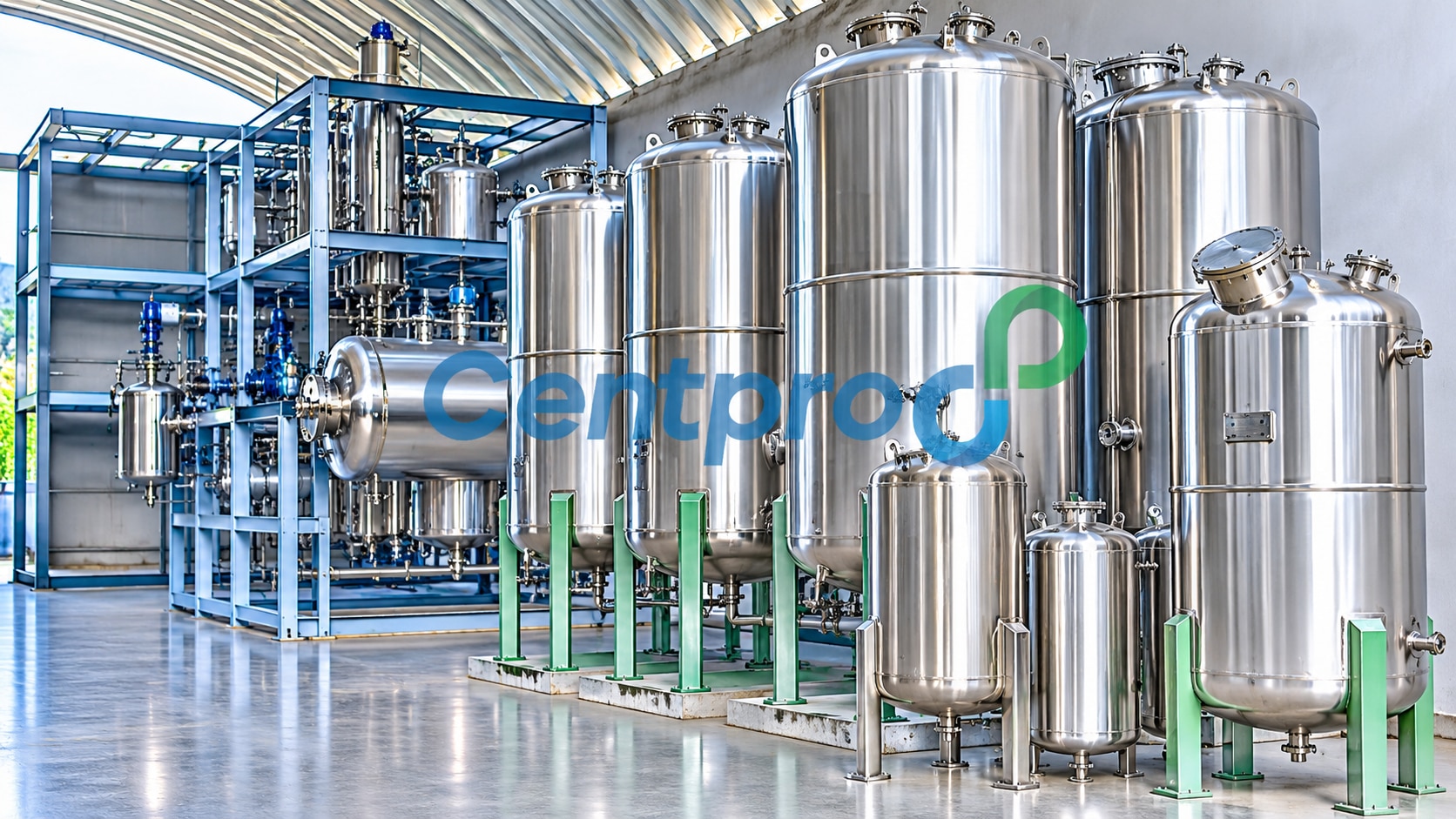
Process Design for a Herbal Extraction Plant
A successful extraction plant starts with a defined process rather than a standard equipment package. The extraction method, raw material properties and target product determine the equipment configuration and operating conditions.
1. Raw Material Preparation
Herbal materials may require cleaning, cutting, crushing or milling before extraction. Particle size affects the exposed surface area, solvent contact and filtration behaviour.
The preparation stage should consider the material's moisture content, bulk density, handling characteristics and sensitivity to heat or oxidation.
2. Extraction Vessel Design
The extraction vessel provides controlled contact between the plant material and the selected solvent.
Important design considerations include:
Batch size and working volume
Vessel geometry and material of construction
Heating and temperature control
Agitation and solvent distribution
Charging and discharge arrangements
Filtration or solids-removal requirements
Cleaning and maintenance access
Depending on the application, extraction vessels may use jackets or other suitable heating arrangements. Agitation requirements vary with the botanical material, solvent properties and extraction method.
Stainless steel grades such as SS304 or SS316L may be considered where appropriate, subject to chemical compatibility, product requirements and cleaning needs.
3. Solid-Liquid Separation
After extraction, the liquid extract must be separated from the spent plant material. The suitable separation method depends on particle size, solids loading, viscosity and the required clarity of the extract.
Potential equipment options include suitable filters, filter vessels, filter presses or nutsche filters, depending on the process.
The design should account for filterability, retained liquid in the spent solids, cleaning requirements and the handling of residual solvent.
4. Solvent Recovery and Recycling
Solvent recovery can be an important part of the plant's operating economics, particularly where solvent consumption is significant.
Recovered solvent may be reused when its quality meets the process requirements. The system may include distillation columns, evaporators, condensers, receivers and associated transfer equipment.
The design should consider solvent volatility, mixture composition, boiling-point behaviour, azeotropes where relevant, required recovered-solvent quality and the characteristics of the residual extract.
Solvent recovery performance must be established from the actual process conditions and material balance rather than assumed from equipment type alone.
5. Extract Concentration
The separated liquid may require concentration to achieve the required extract strength or reduce the volume for downstream processing.
Equipment selection depends on solvent properties, extract viscosity, heat sensitivity, fouling potential and the target concentration.
Possible approaches include evaporation or distillation-based concentration. Vacuum operation may be considered when lower operating temperatures are beneficial, subject to the process design.
6. Final Product Handling
The final product may be collected as a liquid concentrate, viscous extract or material intended for further drying and formulation.
Depending on the required product form, the plant may need storage vessels, transfer pumps, temperature-controlled holding, drying equipment or powder-handling systems.
Final product specifications should be defined before the equipment package is finalised.
Key Equipment in a Turnkey Herbal Extraction Plant
The equipment list varies by botanical material, solvent system, product form and production capacity.
| Equipment | Main function |
|---|---|
| Raw material preparation equipment | Prepares plant material for extraction |
| Extraction vessel | Provides controlled solvent contact and extraction |
| Agitator and heating system | Supports mixing and temperature control |
| Solid-liquid separation equipment | Separates extract liquor from spent material |
| Distillation column or evaporator | Supports solvent recovery and concentration |
| Condenser and solvent receiver | Condenses and collects recovered solvent |
| Storage and transfer vessels | Handle solvents, intermediate streams and extracts |
| Pumps and process piping | Transfer materials between process stages |
| Instrumentation and controls | Monitor and regulate key operating conditions |
| Utility systems | Provide required heating, cooling and other services |
Additional equipment may be required for drying, solvent storage, emissions control, cleaning and waste handling.
Plant Integration: Beyond Individual Equipment
An effective turnkey plant requires the equipment to operate as one coordinated process system.
Process Flow and Material Balance
The process flow diagram should establish the sequence of operations and identify the main material streams. A material balance helps estimate raw material, solvent, extract, recovered solvent and spent biomass quantities.
These calculations form the basis for equipment sizing, storage requirements and utility estimates.
Heating, Cooling and Utility Requirements
The plant may require steam, thermal fluid, chilled water, cooling water, electricity or other utilities depending on the process.
Utility demand should be estimated from the extraction cycle, solvent recovery duty, operating schedule and required production rate.
Piping, Instrumentation and Automation
Piping and instrumentation should support safe material transfer, temperature control, pressure monitoring, level measurement and process sequencing.
The appropriate degree of automation depends on batch frequency, production scale, operating procedures and traceability requirements.
Solvent Safety and Environmental Considerations
Where flammable or volatile solvents are used, the design should address ventilation, ignition-source control, electrical equipment suitability, bonding and grounding, pressure relief, leak prevention and appropriate fire-protection measures.
Solvent vapours and process emissions must be evaluated, with suitable containment and recovery arrangements where required. Applicable local regulations and hazardous-area requirements should be confirmed for the installation location.
Factors That Influence Plant Capacity and Cost
The capital cost and configuration of a herbal extraction plant depend on more than extraction vessel volume.
Key factors include:
Production capacity: Raw material throughput per batch or per day.
Botanical material: Moisture content, particle size, bulk density and extraction behaviour.
Solvent system: Solvent type, circulation quantity, recovery requirements and material compatibility.
Extraction conditions: Temperature, pressure, contact time and agitation.
Separation requirements: Solids loading, filtration characteristics and required extract clarity.
Concentration and final product: Required extract strength, residual-solvent limits and final product form.
Automation and utilities: Control philosophy, heating and cooling requirements, and available site infrastructure.
Safety and compliance: Applicable pressure-vessel, electrical, fire-safety and environmental requirements.
A reliable quotation should be based on a defined process scope, production basis, equipment list and agreed battery limits.
Why Process-Led Engineering Matters
A plant designed around individual equipment specifications may not deliver the intended overall production performance if extraction, filtration and solvent recovery are not properly matched.
Process-led engineering considers the complete sequence of operations, including cycle time, intermediate storage, solvent reuse, utility demand, cleaning and product handling.
Centpro Engineering Pvt. Ltd. supports industrial process equipment requirements, including extraction vessels and related equipment for separation, distillation, heat transfer and evaporation. The specific engineering, manufacturing, supply, installation and commissioning scope should be agreed for each project.
Centpro's manufacturing base is in Pune, Maharashtra, India. Project feasibility, equipment specifications and delivery arrangements can be evaluated for domestic and international requirements.
Frequently Asked Questions
1. What is included in a turnkey herbal extraction plant?
Depending on the project scope, a plant may include raw material preparation, extraction vessels, solid-liquid separation, solvent recovery, concentration, storage, process piping, instrumentation and utility integration. Drying and final product handling may be included where required.
2. Which solvents can be used for herbal extraction?
Solvent selection depends on the botanical material, target compounds, extraction method, downstream processing and product requirements. Water, ethanol and other suitable solvents may be considered after evaluating compatibility, recovery requirements, safety and regulatory considerations.
3. Is solvent recovery necessary in a herbal extraction plant?
Solvent recovery is often important where solvent reuse can reduce consumption, operating costs and waste generation. Its suitability and economics depend on solvent properties, process losses, required recovered-solvent quality and the overall material balance.
4. Can the extraction plant be designed for heat-sensitive botanical compounds?
The process can be evaluated for temperature-sensitive materials. Depending on the product, lower-temperature operation, controlled heating and vacuum-assisted concentration may be considered. Appropriate conditions must be established through process data and, where necessary, trials.
5. How is the capacity of a herbal extraction plant determined?
Capacity depends on the quantity of raw material processed per batch or day, extraction cycle time, solvent-to-solid ratio, separation time, concentration duty and operating schedule. The full process cycle must be considered rather than extraction vessel volume alone.
6. What information is required to prepare a plant proposal?
A preliminary assessment typically requires the botanical material, target extract, raw material throughput, solvent type, extraction method, product form, required output, available utilities and project location. Existing process data or laboratory results can help refine the design.
Discuss Your Herbal Extraction Plant Requirements
Planning a new herbal extraction facility or expanding an existing processing line?
Share your botanical material, intended extract, production capacity, solvent system, required final product and project location. Centpro Engineering can review the process requirements and discuss the appropriate equipment and integration scope.
Centpro Engineering Pvt. Ltd.
Location: 306, Vishal Ventilla, Magarpatta Road, Hadapsar, Pune 411013, Maharashtra, India
Email: sales@centpro.com
Phone: +91 80-4275-4893
WhatsApp: +91 70660 14007
Related equipment: Industrial Chemical Reactors | Distillation Columns | Heat Exchangers | Solvent Recovery Systems | Industrial Filters | Evaporators|Crystallizer
