
From Process Concept to Production: Engineering a Complete Chemical Plant
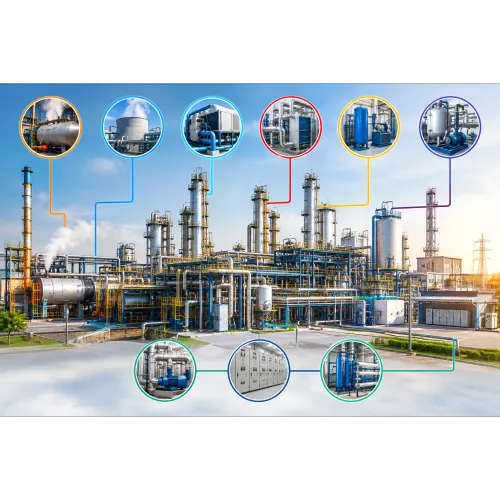
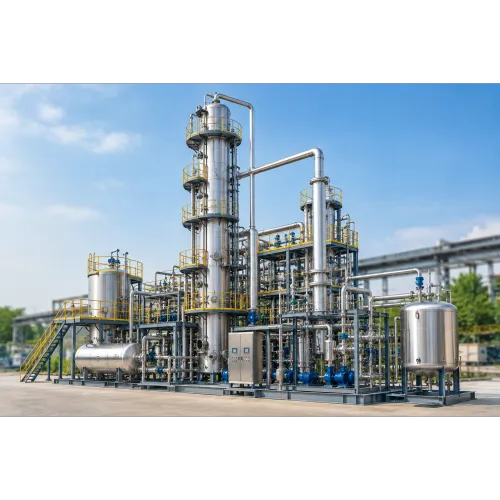
Building a chemical plant involves far more than selecting individual equipment. A successful plant requires the integration of process design, equipment, piping, structures, utilities, electrical systems, instrumentation, automation, installation, and commissioning into one coordinated operating system.
CentPro Engineering Pvt. Ltd. provides turnkey chemical plant engineering and EPC solutions, helping industries convert process concepts and production requirements into functional, integrated manufacturing facilities.
Our approach covers the complete project lifecycle:
Process Design → Equipment → Piping → Structure → Utilities → Electrical → Instrumentation → Automation → Installation → Commissioning
By coordinating these disciplines under a unified engineering approach, CentPro helps clients reduce interface-related challenges and achieve a plant that is designed not merely to be installed, but to operate reliably and efficiently.
What is Turnkey Chemical Plant Engineering?
A turnkey chemical plant is an integrated facility where multiple process and utility systems are engineered, supplied, installed, interconnected, and commissioned as a complete project.
Instead of managing multiple independent equipment suppliers and contractors, the client can work with a single engineering partner responsible for coordinating the major plant systems.
A typical turnkey chemical plant project can include:
Process design and engineering
Process flow diagrams and P&IDs
Equipment selection and engineering
Process equipment manufacturing
Plant layout and equipment arrangement
Piping engineering and installation
Structural engineering
Utility systems
Electrical systems
Instrumentation
Automation and control systems
Site installation
Testing and commissioning
Performance optimization
The exact project scope is developed according to the process, production capacity, site conditions, utility availability, statutory requirements, and client's technical specifications.
From Process Concept to Complete Plant
Every chemical plant begins with a process requirement.
This may involve a new chemical manufacturing process, capacity expansion, a new product line, or modernization of an existing facility.
CentPro's engineering approach begins by understanding the process and translating the requirements into an integrated plant design.
The overall engineering sequence can involve:
Process Requirement → Process Design → Equipment Design → Plant Layout → Piping & Utilities → Electrical & Instrumentation → Automation → Installation → Commissioning → Production
This integrated approach helps ensure that individual systems work together as one coordinated plant.
Process Design and Engineering
Process engineering establishes the technical foundation of the plant.
Depending on project requirements, the engineering scope can include:
Process flow development
Material balance
Heat balance
Equipment sizing
Process equipment selection
PFD development
P&ID development
Utility requirement assessment
Operating parameter definition
Process control philosophy
Equipment specifications
Process integration
Process design considers factors such as feed characteristics, reaction conditions, temperature, pressure, residence time, separation requirements, material compatibility, production capacity, and utility availability.
The objective is to develop a technically viable process scheme before moving into detailed equipment and plant engineering.
Chemical Process Equipment Integration
A chemical plant typically contains multiple interconnected equipment systems.
Depending on the application, these may include:
Reactors
Distillation columns
Evaporators
Heat exchangers
Condensers
Reboilers
Pressure vessels
Storage tanks
Receivers
Filters
Dryers
Solvent recovery systems
Separation systems
Pumps
Vacuum systems
The equipment cannot be considered independently. Their capacities, connections, operating conditions, utilities, control requirements, and maintenance accessibility must be coordinated as part of the complete plant.
CentPro's engineering approach considers equipment interfaces during the overall plant design to support smooth process integration.
Plant Layout and Equipment Arrangement
An effective plant layout is critical for safe and efficient plant operation.
Equipment positioning is developed considering:
Process flow
Material movement
Piping routes
Equipment accessibility
Maintenance requirements
Operator access
Safety clearances
Utility distribution
Structural requirements
Future expansion
Site constraints
A well-planned layout can reduce unnecessary piping lengths, improve accessibility, simplify maintenance, and support safer plant operation.
For brownfield projects, the layout must additionally account for existing equipment, operating units, available space, shutdown constraints, and tie-in locations.
Piping Engineering and Plant Connectivity
Piping forms the physical connection between the different systems within a chemical plant.
CentPro coordinates process and utility piping based on:
Process requirements
Flow rates
Pressure and temperature
Material compatibility
Equipment nozzle locations
Valve requirements
Drain and vent arrangements
Maintenance accessibility
Insulation requirements
Utility distribution
The objective is to develop piping systems that provide reliable process connectivity while maintaining accessibility, safety, and operational flexibility.
Utility Integration
Chemical plants depend on reliable utilities for continuous production.
Depending on the process, utilities may include:
Steam
Cooling water
Chilled water
Hot water
Thermic fluid
Compressed air
Vacuum
Nitrogen
Process water
Electrical power
CentPro evaluates utility requirements during the engineering stage so that process equipment, piping, heat exchangers, instrumentation, and control systems can be coordinated with the available utility infrastructure.
For new plants, utilities can be incorporated into the overall plant design.
For existing facilities, the engineering can focus on integrating new process requirements with the plant's available utility capacity.
Electrical, Instrumentation and Automation
Modern chemical plants require coordinated electrical, instrumentation, and automation systems to achieve stable and controlled operation.
The engineering scope can incorporate:
Electrical power distribution
Motor and pump coordination
Instrument selection
Temperature measurement
Pressure measurement
Flow measurement
Level measurement
Control valves
Control panels
PLC-based automation
HMI/SCADA systems
Alarms
Interlocks
Process sequencing
Automation can help operators monitor critical process parameters and maintain operating conditions within defined limits.
The control philosophy is developed around the process requirements, equipment characteristics, safety considerations, and desired level of automation.
Greenfield Chemical Plant Projects
A greenfield chemical plant is developed on a new site without relying on an existing production facility.
Greenfield projects provide greater flexibility in:
Plant layout
Equipment arrangement
Utility planning
Process flow
Infrastructure development
Future expansion
Material movement
Piping routing
CentPro can support the engineering and execution of greenfield chemical plants by coordinating the different technical disciplines required to transform the process concept into an operational facility.
Brownfield Chemical Plant Expansion
Not every capacity expansion requires construction of an entirely new plant.
Existing facilities can often be expanded or upgraded through brownfield plant engineering and process integration.
Brownfield projects may involve:
Additional reactors
New process equipment
Equipment replacement
Debottlenecking
Piping modifications
Utility augmentation
Automation upgrades
Additional storage
New process lines
Integration with existing equipment
Brownfield engineering requires careful evaluation of the existing facility to identify available capacity, physical constraints, equipment condition, utility limitations, and tie-in requirements.
The objective is to add or modify capacity while maintaining compatibility with the existing production infrastructure.
Equipment Coordination Across the Plant
One of the major challenges in a complete chemical plant is coordinating equipment supplied by different disciplines or vendors.
Equipment must be coordinated with:
Process conditions
Piping
Structural supports
Electrical requirements
Instrumentation
Automation
Utility connections
Maintenance access
Safety requirements
CentPro's integrated engineering approach helps manage these interfaces so that individual systems fit into the overall plant design.
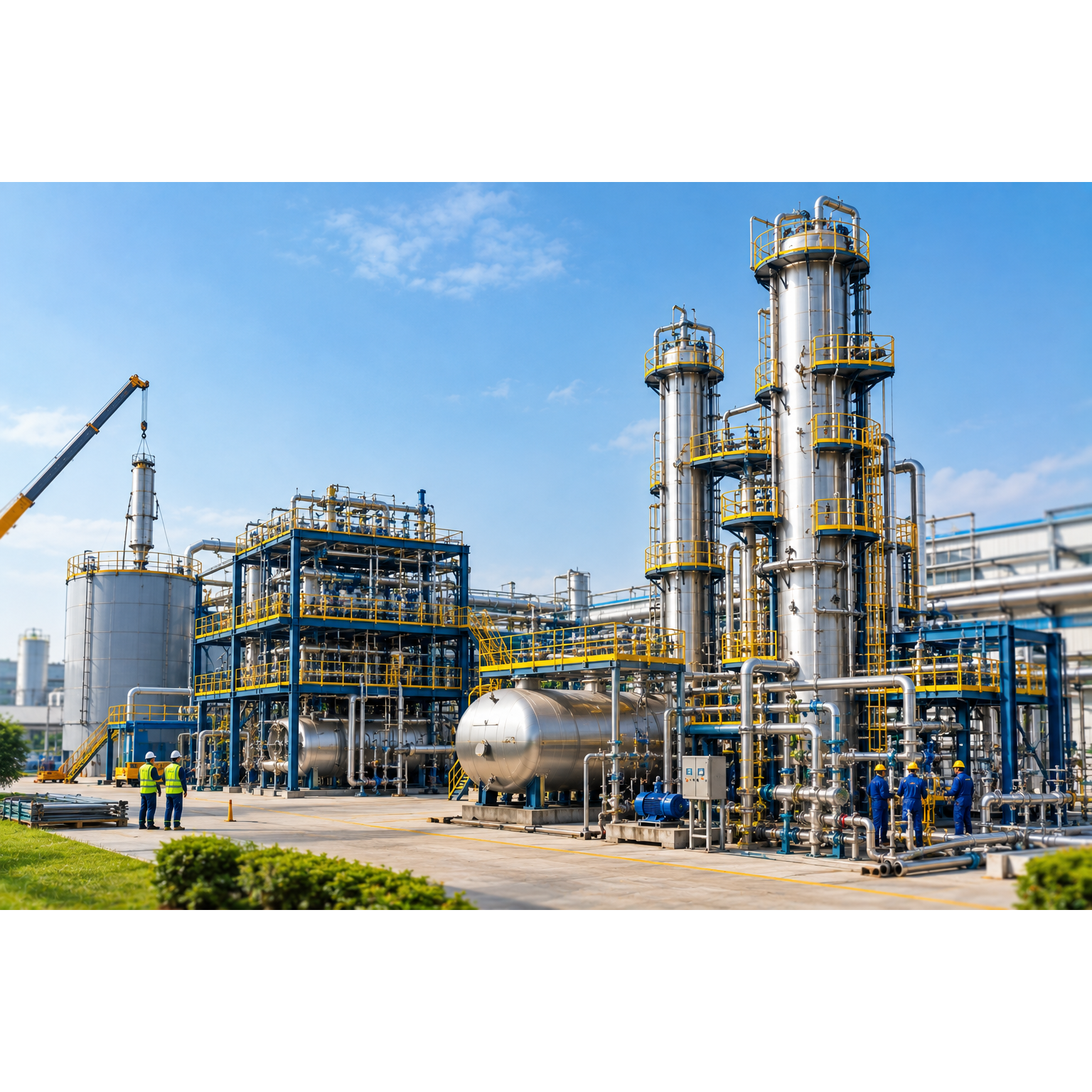
Installation and Site Execution
Engineering must ultimately translate into a physically functional plant.
The site execution phase can include:
Equipment positioning
Equipment erection
Piping installation
Structural installation
Utility connections
Electrical installation
Instrument installation
Control-panel installation
Equipment alignment
Testing
Pre-commissioning activities
Coordination between engineering and site execution is important to ensure that installation follows the intended process and equipment design.
Commissioning: From Installed Equipment to Operating Plant
Commissioning is the stage where the engineered plant is progressively brought into operation.
Depending on the project, commissioning activities can include:
Equipment inspection
Piping checks
Hydrotesting and testing as applicable
Electrical checks
Instrument calibration
Loop checking
Utility commissioning
Equipment trial runs
Control-system verification
Interlock testing
Process commissioning
Performance observation
The objective is to transition the plant from an installed facility into a stable operating system.
Performance Optimization
Plant completion is not necessarily the end of engineering.
Operating data can be evaluated to identify opportunities for improving:
Production capacity
Energy consumption
Equipment utilization
Heat recovery
Process stability
Utility consumption
Recovery efficiency
Automation
Overall plant performance
Performance optimization may involve equipment modifications, process adjustments, debottlenecking, heat integration, control-system improvements, or utility optimization depending on the operating conditions.
Turnkey Chemical Plant: Integrated Scope
A typical turnkey chemical plant project can be structured around the following engineering chain:
1. Process Engineering
Process concept, material balance, heat balance, PFDs and P&IDs.
2. Equipment Engineering
Equipment selection, sizing, specifications, manufacturing and supply.
3. Plant Layout
Equipment arrangement, accessibility, structural coordination and site integration.
4. Piping Engineering
Process piping, utility piping, valves, fittings and equipment connectivity.
5. Utility Engineering
Steam, cooling water, chilled water, thermic fluid, compressed air, vacuum and other utilities.
6. Electrical Engineering
Power distribution, motors, panels and electrical systems.
7. Instrumentation
Field instruments, control valves, measurement systems and instrumentation architecture.
8. Automation
PLC, HMI/SCADA, process control, alarms and interlocks.
9. Installation
Equipment erection, piping, electrical, instrumentation and associated site works.
10. Commissioning
Testing, trial operation, process stabilization and plant handover.
Industries Served
Turnkey chemical plant engineering can be applied across multiple process industries, including:
Chemical Manufacturing
Specialty Chemicals
Pharmaceutical Manufacturing
API Manufacturing
Agrochemicals
Petrochemicals
Paints and Coatings
Resins and Adhesives
Solvents and Intermediates
Food and Process Industries
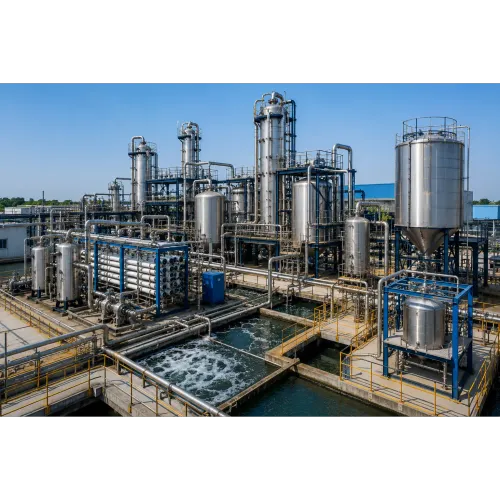
Water and Wastewater Treatment
Other Process Industries
The engineering configuration is customized according to the specific process and production requirements.
Benefits of a Turnkey Chemical Plant Approach
An integrated EPC approach can provide several advantages:
Single-point engineering coordination
Better coordination between process and equipment systems
Reduced interface-related issues
Integrated plant layout
Coordinated utility planning
Streamlined equipment integration
Improved installation coordination
Faster transition from installation to commissioning
Better control over project interfaces
Scope for performance optimization
The actual project benefits depend on the project scope, execution strategy, process complexity, and site conditions.
CentPro's Turnkey Chemical Plant Engineering Capability
CentPro Engineering combines process engineering, equipment design and manufacturing, piping, heat-transfer engineering, automation, installation, and commissioning to develop integrated chemical process plants.
Our scope can extend from individual process equipment packages to complete turnkey chemical plant engineering and EPC execution.
By bringing multiple engineering disciplines together, CentPro aims to provide a coordinated solution covering the complete journey:
Process Concept → Engineering → Manufacturing → Integration → Installation → Commissioning → Production
The objective is to deliver chemical plants that are designed around the client's process requirements, production targets, utility infrastructure, safety requirements, operating conditions, and future expansion needs.
Frequently Asked Questions
1. What is turnkey chemical plant engineering?
Turnkey chemical plant engineering involves designing, supplying, installing, integrating, and commissioning the major systems required to establish a functional chemical manufacturing plant. The scope can include process engineering, equipment, piping, utilities, electrical, instrumentation, automation, installation, and commissioning.
2. What does a chemical plant EPC contractor do?
A chemical plant EPC contractor coordinates engineering, procurement/manufacturing, and construction or installation activities for a chemical process facility. Depending on the project scope, this can extend through commissioning and performance optimization.
3. Can CentPro execute a complete chemical plant project?
CentPro can undertake integrated chemical process plant projects covering process engineering, equipment design and manufacturing, piping, utilities, instrumentation, automation, installation, commissioning, and plant integration, subject to the defined project scope.
4. What is the difference between greenfield and brownfield chemical plants?
A greenfield project involves developing a new facility, while a brownfield project involves expanding, modifying, upgrading, or integrating systems within an existing operating facility.
5. Can an existing chemical plant be expanded without building a new plant?
Yes. Depending on available space, equipment capacity, utilities, process requirements, and existing infrastructure, capacity can often be increased through equipment additions, replacement, debottlenecking, piping modifications, utility augmentation, and automation upgrades.
6. Why is plant layout important in chemical plant engineering?
Plant layout determines how equipment, piping, utilities, structures, access routes, and operating areas are arranged. A well-engineered layout can improve process flow, accessibility, maintenance, safety, and future expansion possibilities.
7. Does turnkey chemical plant engineering include commissioning?
Commissioning can be included within the project scope. It may involve equipment checks, utility commissioning, instrument calibration, loop checks, control-system verification, trial operation, process stabilization, and performance observation.
8. Can a turnkey plant be integrated with existing utilities?
Yes. New process systems can be engineered around available steam, cooling water, chilled water, thermic fluid, compressed air, vacuum, electrical power, and other plant utilities, subject to available capacity and project requirements.