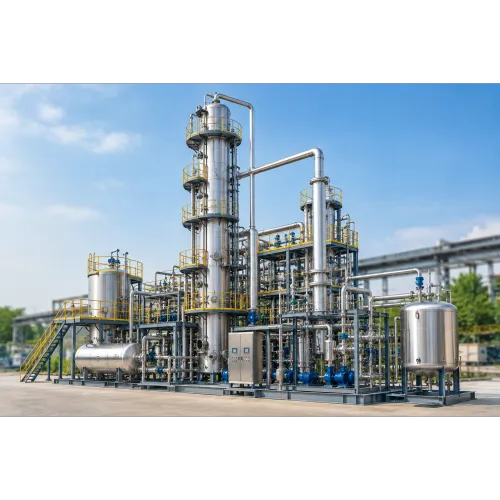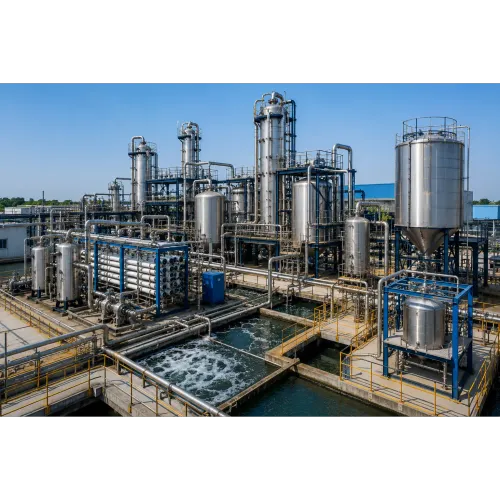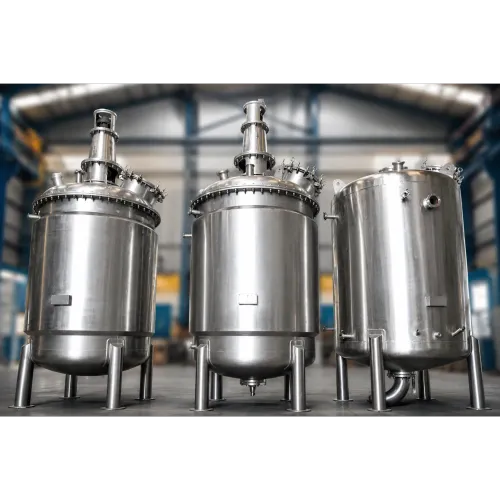

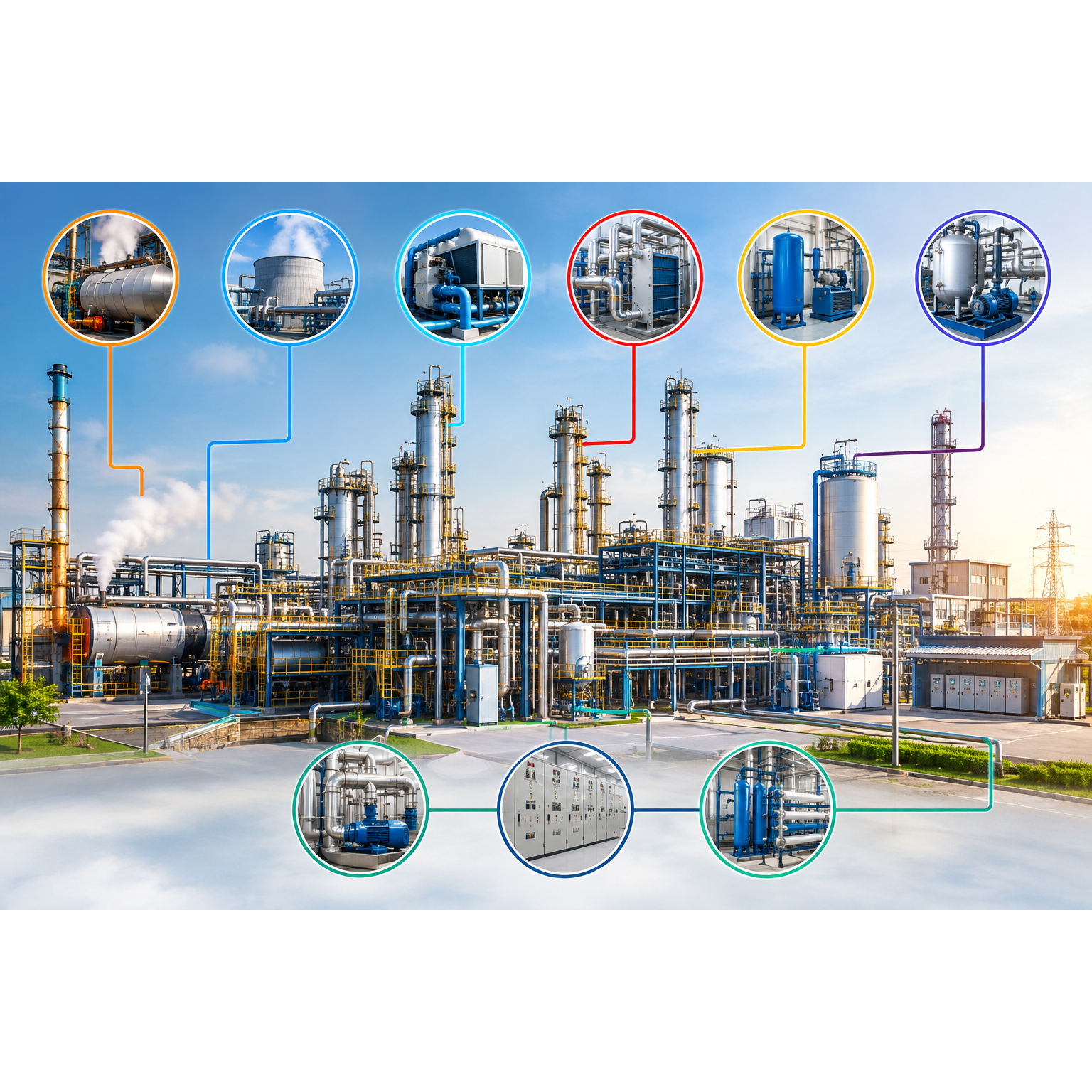
A process plant is more than its reactors, evaporators, distillation columns, heat exchangers and storage systems.
Behind every successful process is a carefully engineered utility network that supplies the right quantity, pressure, temperature and quality of energy and services required to keep the plant operating reliably.
At CentPro Engineering, we approach Process Utility Engineering as an integral part of process and EPC design—not as an afterthought.
Utilities Are the Backbone of Process Performance
A plant may have correctly sized process equipment, but inadequate utility design can still result in:
Reduced production capacity
Higher energy consumption
Unstable process conditions
Longer batch cycles
Poor heat-transfer performance
Increased equipment downtime
Higher operating costs
Difficulties during plant expansion
The objective of utility engineering is therefore not simply to "provide utilities", but to ensure that every process system receives the right utility at the right condition and at the right time.
1. Steam System – Delivering Reliable Thermal Energy
Steam is one of the most important thermal utilities in chemical, pharmaceutical, food and process industries.
A properly engineered Steam System Design considers:
Required steam pressure and temperature
Peak and average steam demand
Steam distribution and pressure losses
Control valves and pressure-reducing stations
Steam traps and condensate drainage
Insulation and heat loss
Condensate recovery
Future capacity requirements
Incorrect steam-line sizing or poor pressure management can cause pressure drops, unstable heating and increased steam consumption.
For systems such as evaporators, reboilers, reactors and dryers, utility stability directly influences process performance.
2. Cooling Water – Removing Process Heat Efficiently
Cooling water systems are essential for removing heat from condensers, heat exchangers, reactors and other process equipment.
A Cooling Water System must be designed around:
Heat load → Flow requirement → Supply temperature → Return temperature → Pressure requirement → Cooling capacity
The system must account for both normal and peak operating conditions.
Poor cooling-water design can result in higher process temperatures, reduced condensation efficiency and increased cooling-tower or chiller loads.
3. Chilled Water – When Temperature Control Becomes Critical
Certain processes require cooling below conventional cooling-water temperatures.
Chilled Water Systems are commonly used for:
Solvent condensation
Product cooling
Reactor temperature control
Crystallisation
HVAC/process-area requirements
Temperature-sensitive pharmaceutical and chemical processes
The chiller capacity, circulation flow, supply/return temperatures and hydraulic losses must be evaluated together.
Over-sizing increases capital and energy costs, while under-sizing can restrict production during peak operating conditions.
4. Hot Water – Controlled Heating Without Direct Steam
Hot water can provide a more controlled and efficient heating medium for applications where direct steam heating is unnecessary or undesirable.
It can be integrated with:
Heat recovery systems
Process heaters
Reactor jackets
Heat exchangers
Cleaning systems
Pre-heating systems
Where practical, waste heat or recovered energy can be used to generate hot water, reducing dependence on fresh steam and improving overall plant energy efficiency.
5. Compressed Air – Small Utility, Large Impact
Compressed air supports instrumentation, pneumatic control valves, actuators and plant equipment.
Utility engineering must consider:
Instrument air quality
Required pressure
Peak air demand
Air receiver capacity
Moisture removal
Filtration
Dryer requirements
Distribution pressure losses
Inadequate compressed-air pressure can cause control valves and pneumatic equipment to operate incorrectly, directly affecting process stability.
6. Vacuum – Designing for the Actual Process Requirement
Vacuum systems are widely used in evaporation, drying, distillation and solvent recovery.
The vacuum system must be matched to:
Required operating pressure
Vapour load
Condensation capability
Non-condensable load
Temperature
Equipment volume
Leakage considerations
A vacuum system that is not correctly integrated with condensers and process equipment can lead to unstable operating pressure and reduced plant performance.
7. Condensate – Recovering Energy Instead of Losing It
Condensate is not simply wastewater from a steam system.
It contains valuable thermal energy and can often be recovered and returned to the boiler system.
A properly designed Condensate Recovery System can help:
Reduce boiler feedwater requirements
Reduce fuel consumption
Recover sensible heat
Reduce chemical treatment requirements
Improve overall steam-system efficiency
This is where utility engineering directly contributes to operating-cost reduction.
8. Electrical Systems – Powering the Process Reliably
Electrical integration must be considered alongside process requirements.
The utility design may include:
Connected load assessment
Motor loads
MCC and PCC requirements
VFDs
Pumps and compressors
Heating systems
Instrumentation
Emergency power requirements
Cable and distribution planning
For energy-intensive systems such as MVR evaporators, chillers, compressors and vacuum systems, electrical consumption can become a significant component of operating cost.
Therefore, process design and electrical engineering must work together from the beginning.
9. Process Water – The Starting Point of Many Operations
Process water quality and availability can directly affect production.
Depending on the application, the plant may require:
Raw water
Soft water
DM water
RO permeate
Treated water
Recycled process water
The required quality, flow, pressure and storage capacity must be established based on the process and utility balance.
Where water consumption is significant, integrating water recovery, reuse and ZLD strategies can further reduce freshwater demand and wastewater generation.
The Utility Balance Connects the Entire Plant
The real value of utility engineering lies in integration.
For example:
Boiler → Steam Header → Process Equipment → Condensate Recovery → Boiler Feed System
Cooling Tower → Cooling Water Pumps → Process Heat Exchangers → Return Header → Cooling Tower
Chiller → Chilled Water Pumps → Process Equipment → Return → Chiller
RO/DM Plant → Process Water Storage → Distribution Network → Process Units
These systems must be evaluated together with the process mass and energy balance.
Poor Utility Engineering Has a Direct Cost
A utility system that is poorly designed may remain unnoticed during initial plant operation but become a bottleneck as production increases.
A steam header may not maintain pressure at peak demand.
A cooling-water network may fail to remove sufficient heat.
A chiller may operate continuously at maximum load.
A vacuum system may struggle to maintain operating pressure.
Compressed-air pressure may fall when multiple pneumatic systems operate simultaneously.
The result is often the same:
Lower capacity + Higher energy consumption + Unstable production + Higher operating cost.
Engineering Utilities Around the Process
The right approach is to design utilities from the process requirement outward.
At CentPro Engineering, process utility planning can be integrated with process design, equipment selection, energy calculations, piping, instrumentation, electrical systems and overall EPC execution.
The objective is simple:
Reliable utilities. Stable processes. Optimised energy consumption. Predictable plant performance.
Because a process plant doesn't run on equipment alone.
It runs on the engineering system connecting everything together.