
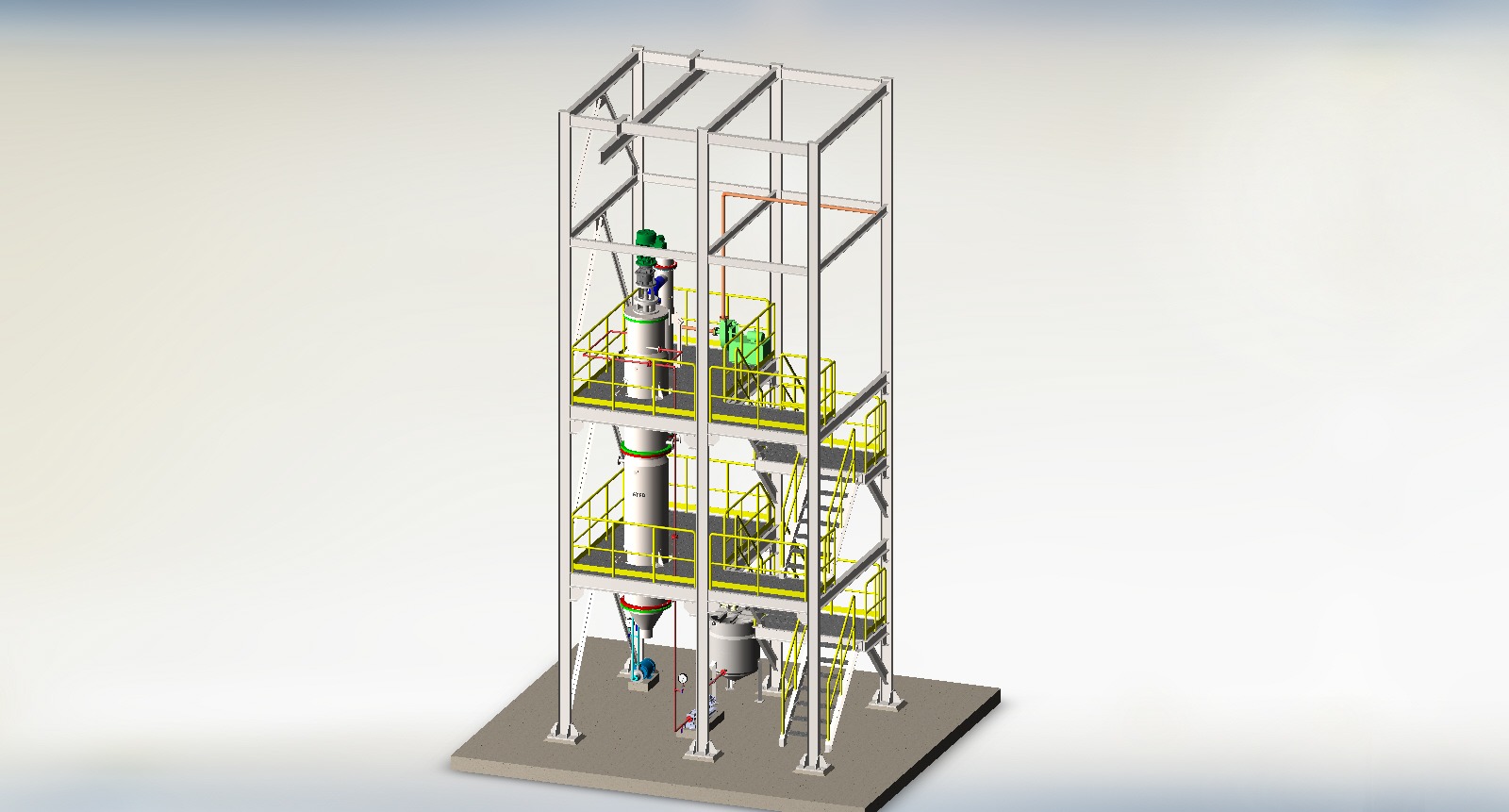
In a Zero Liquid Discharge (ZLD) system, wastewater treatment does not end when the water volume is reduced. As water is progressively removed through RO and evaporation, dissolved salts and non-volatile components become increasingly concentrated. At the final stage, the challenge changes from water treatment to solids generation and handling.
This is where an Agitated Thin Film Dryer (ATFD) plays an important role.
At CentPro Engineering, we design integrated ZLD systems that combine RO, evaporation and final solids-handling technologies based on the wastewater characteristics, recovery targets and operating requirements.
From Concentrated Brine to Solids
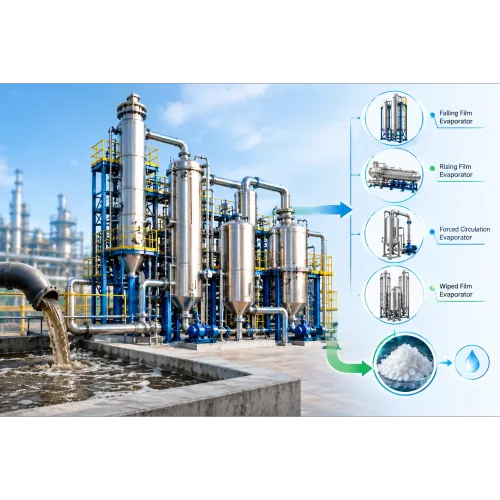
A typical thermal ZLD system may use RO followed by MEE/MVR or other evaporative concentration systems to recover water and reduce the volume of concentrate.
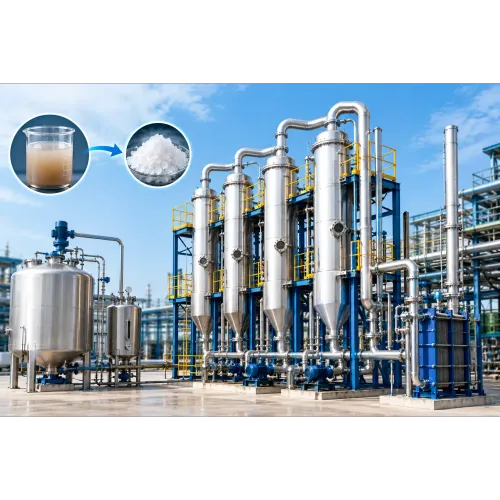
As evaporation continues, the remaining stream becomes a highly concentrated brine containing dissolved salts and other non-volatile materials. Further concentration can lead to crystallisation, scaling and increased viscosity.
At this stage, conventional evaporation becomes increasingly difficult to operate. The process requires equipment specifically designed to handle the concentrated feed and convert it into a manageable solid or semi-solid product.
How ATFD Works
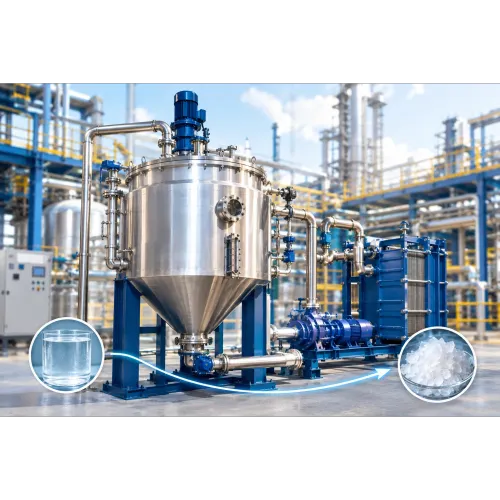
An ATFD uses a heated cylindrical surface and a mechanically agitated rotor to maintain a thin, continuously renewed film of concentrated feed over the heat-transfer surface.
As the feed moves through the equipment, moisture is evaporated and the concentration of dissolved solids increases. The agitator continuously helps distribute the material across the heated surface and assists in moving the concentrated solids toward discharge.
The result is a highly concentrated output that can be further handled as dry or semi-dry solids, depending on the process and operating conditions.
Crystallisation and Final Solids Generation
The performance of an ATFD depends heavily on the characteristics of the concentrated brine.
Salt concentration, solubility, crystallisation behaviour, viscosity, boiling point elevation, scaling tendency and feed solids all influence the final equipment design and operating conditions.
As water is removed, salts may reach their saturation point and begin to crystallise. Proper process design is therefore essential to control deposition on the heat-transfer surface and maintain stable operation.
ATFD in a Complete ZLD System
ATFD is generally not considered in isolation. Its performance depends on the upstream concentration process.
A typical ZLD configuration can include:
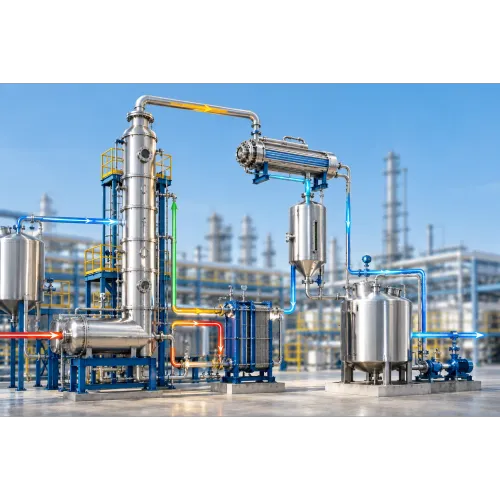
RO → MEE/MVR → Concentrate → ATFD → Final Solids
The objective is to maximise water recovery in the earlier stages while sending only the required concentrated stream to the ATFD. This can reduce the thermal load and overall size of the final drying stage.
Depending on the wastewater characteristics, CentPro evaluates evaporation capacity, concentrate flow, salt composition, heat duty, steam or thermal-fluid requirements and final solids characteristics before selecting the appropriate configuration.
Designing for Difficult Wastewater
Industrial wastewater can contain combinations of high TDS, chlorides, sulphates, silica, organic contaminants and suspended solids. These characteristics can significantly affect evaporation and crystallisation behaviour.
Therefore, ATFD design requires more than calculating heat-transfer area. Feed chemistry, Material of Construction, agitation, residence time, cleaning requirements and solids discharge must all be considered.
Need an ATFD for Your ZLD Project?
Share your wastewater flow rate, TDS, major salts, RO reject quantity, concentrate characteristics and required water recovery with CentPro Engineering. Our process engineering team can evaluate the complete thermal ZLD requirement and determine whether an MEE/MVR, ATFD or integrated configuration is suitable for your application.
Enquire with CentPro Engineering for customised ZLD, evaporation and ATFD solutions.