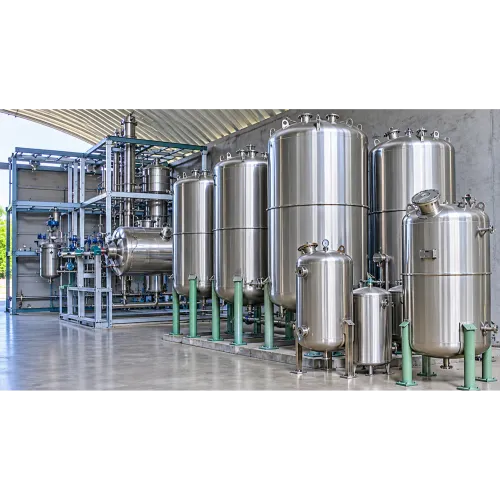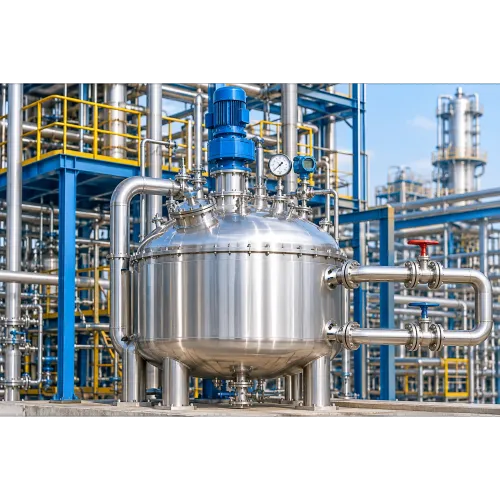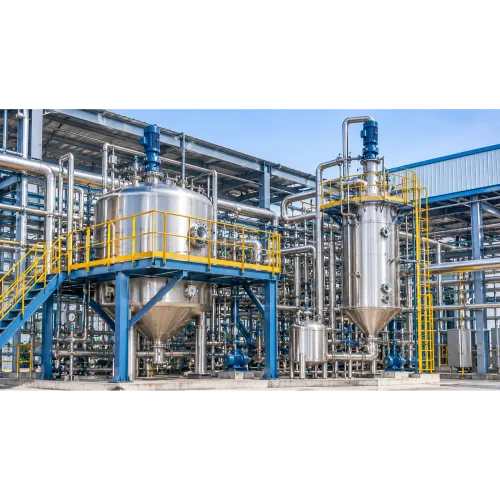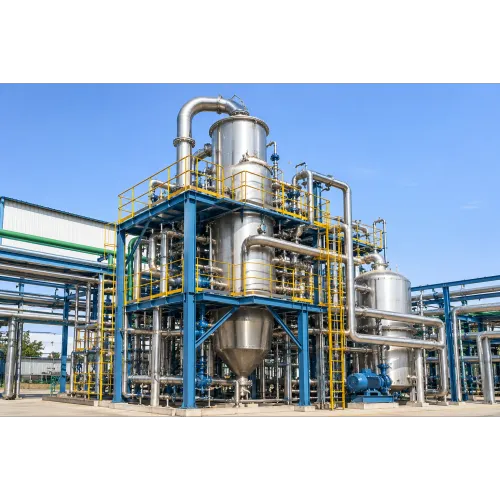

Industrial wastewater treatment becomes more challenging when effluent contains high concentrations of dissolved salts, complex chemicals, non-biodegradable compounds or contaminants that limit water recovery through conventional treatment methods.
Biological treatment, conventional effluent treatment plants (ETPs), ultrafiltration (UF) and reverse osmosis (RO) can play important roles in industrial wastewater management. However, these technologies have operating limits. When the remaining wastewater cannot be treated or recovered economically through conventional processes, thermal treatment can provide the next stage of the solution.
A thermal Zero Liquid Discharge (ZLD) system combines appropriate pretreatment, water recovery, evaporation and, where required, crystallization to recover reusable water while managing the remaining concentrated salts and solids.
The objective is not simply to add an evaporator. It is to engineer a complete treatment system around the wastewater composition, recovery targets, energy availability and final residue-management requirements.
1. Biological Treatment: When Wastewater Chemistry Limits Performance
Biological treatment uses microorganisms to break down biodegradable organic pollutants. It is widely used for wastewater containing suitable concentrations of biodegradable compounds.
However, biological systems may struggle when the wastewater contains high salinity, toxic compounds, inhibitory chemicals, fluctuating loads or significant non-biodegradable organic matter.
Key considerations include:
Biodegradability and organic loading
Salinity and its effect on microbial activity
Toxicity and inhibitory chemical concentrations
Variations in wastewater composition
Required effluent quality for downstream treatment
When biological treatment cannot adequately address the dissolved salts or residual contaminants, additional physicochemical treatment, membrane processes or thermal concentration may be required. Thermal treatment does not automatically replace biological treatment; it can be integrated downstream when the remaining wastewater requires further concentration.
2. Conventional ETP: When Dissolved Contaminants Remain
A conventional ETP may use equalisation, pH correction, coagulation, flocculation, clarification and other treatment stages to remove suspended solids, precipitable contaminants and selected pollutants.
These processes can be effective for their intended purpose, but dissolved salts generally remain in the treated water unless a suitable separation or recovery process is introduced.
Common challenges include:
High total dissolved solids (TDS)
Residual dissolved inorganic salts
Complex or variable effluent composition
Limited reuse opportunities due to water-quality requirements
Concentrated reject streams generated by downstream processes
Depending on the contaminant, additional chemical treatment, selective separation, membranes or evaporation may be needed. The appropriate solution depends on the nature of the dissolved material and the intended quality of recovered water.
3. Reverse Osmosis: When Reject Management Becomes the Challenge
Reverse osmosis (RO) uses pressure to separate water from many dissolved salts and other constituents through a semipermeable membrane. It can achieve substantial water recovery when feed quality and operating conditions are suitable.
However, RO recovery is limited by factors such as osmotic pressure, scaling potential, membrane fouling and feed-water chemistry. As recovery increases, the reject stream becomes more concentrated, potentially reaching conditions where further membrane treatment is impractical.
Important considerations include:
Feed TDS and osmotic pressure
Calcium, sulphate, silica and other scale-forming constituents
Organic fouling and suspended solids
Required water recovery and permeate quality
Reject volume and its final management route
Thermal concentration can treat a suitable RO reject stream beyond the practical operating limits of the membrane system. An evaporator removes additional water, while a crystallizer can recover salts as solids when the process chemistry and design permit.
RO and thermal treatment therefore serve complementary roles in many ZLD configurations.
4. Thermal Evaporation: Concentrate the Remaining Wastewater
Thermal evaporation removes water from a liquid stream by supplying heat. In an industrial ZLD system, an evaporator is commonly used to concentrate RO reject or another suitable pretreated wastewater stream.
Depending on the feed characteristics and energy requirements, potential configurations include multiple-effect evaporators (MEE), mechanical vapour recompression (MVR/MVRE) and other suitable evaporator arrangements.
Selection depends on:
Feed flow rate and TDS
Boiling point elevation and viscosity
Scaling, fouling and corrosion potential
Required concentration and downstream crystallization duty
Available steam, electricity and waste heat
Operating reliability and maintenance requirements
MEE systems reuse vapour heat across multiple effects, while MVR/MVRE systems mechanically recompress vapour to recover useful thermal energy. Neither technology is universally superior; the selection should be based on actual process conditions and techno-economic evaluation.
5. Crystallization: Manage the Concentrated Salt Stream
As evaporation removes water, dissolved salts become increasingly concentrated. Depending on their solubility and the operating conditions, some salts may begin to crystallize.
A crystallizer provides controlled conditions for crystal formation and growth. It can be integrated with the evaporator when further concentration and solid recovery are required.
Key design considerations include:
Salt composition and solubility
Supersaturation and crystallization behaviour
Scaling and fouling potential
Slurry density and crystal characteristics
Mother-liquor recycle and impurity accumulation
Downstream solid-liquid separation
The resulting slurry may be processed using a suitable centrifuge, Nutsche filter or other solids-separation equipment. The recovered solids must then be assessed for their potential reuse, recovery or disposal route.
Not every thermal ZLD system requires a separate crystallizer. The final configuration depends on whether the process must recover solid salts or can manage the concentrated residue through another permitted route.
6. Thermal ZLD System Integration: Design the Complete Process
A thermal ZLD system should be engineered as a connected process rather than a collection of individual equipment packages.
A typical treatment sequence may be:
Industrial Effluent → Equalisation and Pretreatment → Biological or Physicochemical Treatment, Where Required → UF/RO, Where Suitable → RO Reject → Thermal Evaporation → Crystallization, Where Required → Solid-Liquid Separation → Residue Management
Recovered water can be evaluated for reuse according to its quality and the intended application. Concentrated salts and solids require suitable recovery, treatment or disposal arrangements.
Important integration factors include:
Feed characterisation and treatment objectives
Water recovery and water-quality requirements
Heat integration and energy consumption
Scaling, fouling and corrosion control
Process automation and operating stability
Mother-liquor and concentrate management
Final residue classification and compliant disposal
An effective design balances water recovery with energy demand, equipment reliability and the practical management of the final residual stream.
7. When Should an Industrial Facility Consider Thermal ZLD?
Thermal ZLD may be worth evaluating when:
RO reject cannot be further concentrated reliably through membranes.
High-TDS wastewater restricts reuse or discharge options.
Dissolved salts remain after conventional ETP treatment.
Wastewater composition makes biological or membrane treatment alone insufficient.
A facility requires very high water recovery and a managed route for residual salts.
Concentrated brine requires further treatment to support a ZLD objective.
The decision should follow a wastewater characterisation study, assessment of alternative treatment options and an evaluation of lifecycle operating costs. Thermal treatment is not necessary for every industrial wastewater stream, and its feasibility depends on the specific process conditions.
Engineering a Thermal ZLD Solution with Centpro Engineering
At Centpro Engineering, thermal ZLD is approached as a process-engineering challenge involving wastewater characterisation, pretreatment selection, membrane recovery, evaporator configuration, crystallization and residue management.
The objective is to identify the appropriate combination of technologies for the actual effluent—not to apply the same treatment arrangement to every industry.
Evaluating a thermal ZLD system for your plant? Share your wastewater flow rate, TDS, major dissolved salts, COD, existing ETP/RO configuration, reject volume, water-reuse target and available steam or electrical power. These details help establish a suitable process configuration for further technical and techno-commercial evaluation.