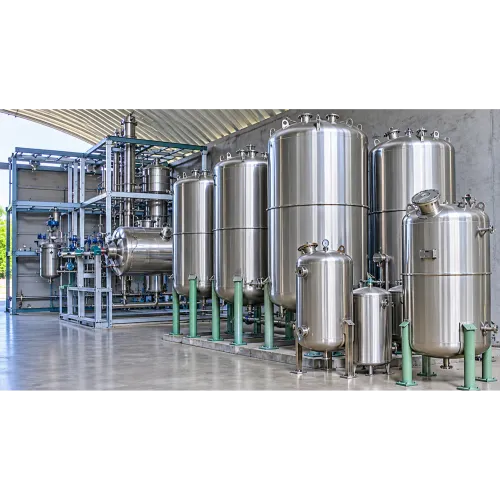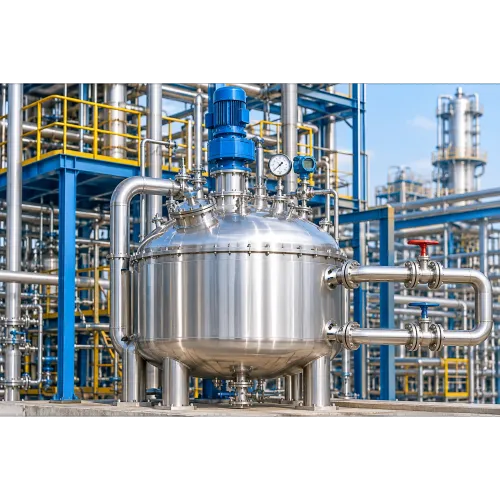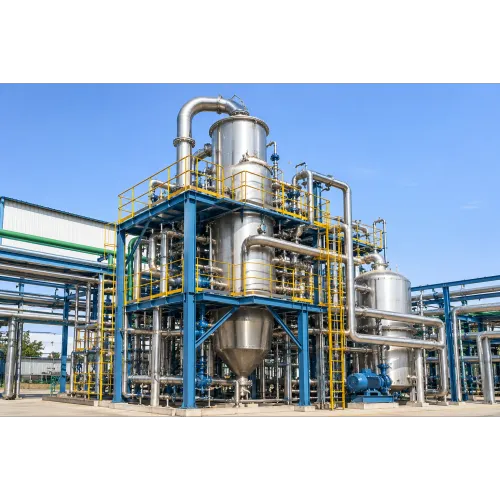

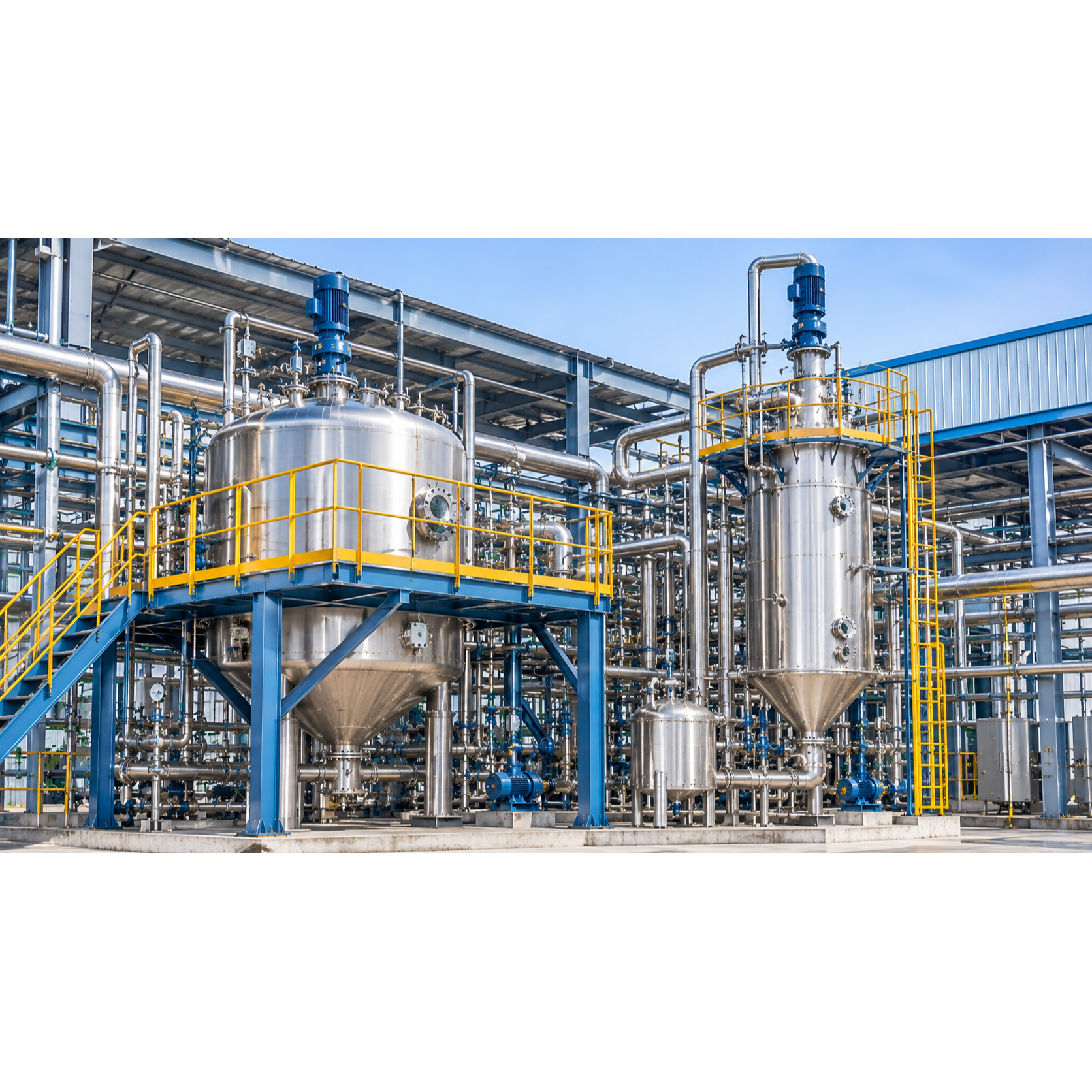
Crystallization is an important separation and purification process in chemical, pharmaceutical and specialty chemical manufacturing. It converts dissolved substances into solid crystals by creating and controlling supersaturation under suitable process conditions. The selected crystallization method influences production capacity, crystal size distribution, product purity, process flexibility and operating cost.
Chemical plants generally use either batch crystallization or continuous crystallization, depending on production volume, product variety, operating requirements and the consistency expected from the final crystals. Batch systems process a defined quantity of material in each cycle, while continuous systems feed and discharge material throughout operation under controlled conditions.
The choice between batch and continuous crystallization depends on the balance between production flexibility, throughput, crystal quality, process control and the operating demands of the plant.
1. What Is Batch Crystallization?
In batch crystallization, a fixed quantity of solution is charged into a crystallizer and processed through a defined operating cycle. Supersaturation is generated by cooling, evaporation, solvent addition, a chemical reaction or a combination of suitable methods.
Crystals nucleate and grow as the process conditions change. Once the target endpoint is reached, the resulting slurry is discharged for downstream separation, washing and drying. The equipment is then prepared for the next batch.
Batch crystallization is often suitable for plants producing multiple products, smaller quantities or materials that require different operating conditions.
Key characteristics include:
Flexible operation: Temperature profiles, cooling rates, seeding strategies and batch endpoints can be adjusted for different products.
Defined production cycles: Charging, crystallization, discharge and cleaning take place in separate stages.
Recipe-based control: Each batch can follow a documented operating procedure with specified process limits.
Changeover requirements: Cleaning and preparation between products can reduce available production time.
Batch-to-batch variation: Differences in feed composition, nucleation, mixing and cooling conditions may affect crystal properties.
Batch operation provides useful flexibility, but repeatable product quality still requires suitable process design, measurement and control.
2. What Is Continuous Crystallization?
In continuous crystallization, feed enters the system and product slurry leaves it continuously or at controlled intervals as part of a sustained production process. The crystallizer is operated to maintain suitable conditions for nucleation and crystal growth while managing the residence time of the material.
Depending on the process, continuous systems may use mixed-suspension crystallizers, draft-tube baffle (DTB) crystallizers, plug-flow arrangements or other configurations. The appropriate equipment depends on solubility behaviour, crystal properties, production requirements and slurry characteristics.
Continuous crystallization is commonly considered for high-volume production where stable operation and consistent product characteristics are important.
Key characteristics include:
Sustained throughput: Feed and product withdrawal can continue during normal operation.
Steady-state control: Temperature, concentration, supersaturation, residence time and slurry density can be controlled within defined operating limits.
Consistent production potential: Stable feed and operating conditions can support repeatable crystal properties.
Higher process integration: Continuous crystallization can be integrated with upstream concentration and downstream solid-liquid separation.
Operational sensitivity: Feed disturbances, equipment interruptions or changes in nucleation and growth conditions can affect the product.
Continuous operation does not automatically guarantee uniform crystals. Consistency depends on residence-time distribution, mixing, seeding, solids classification and the control strategy.
3. Batch vs Continuous Crystallization: Key Differences
Both methods can produce high-quality crystals when appropriately designed. Their suitability depends on the required production pattern and the degree of control needed over crystal formation.
| Selection factor | Batch crystallization | Continuous crystallization |
|---|---|---|
| Production flexibility | High; operating recipes can be changed between batches | Best suited to stable, repeatable production; product changes may require adjustments and transition management |
| Throughput | Depends on batch size and cycle duration | Suitable for sustained, higher-volume production |
| Process control | Control is applied across defined stages of each cycle | Control focuses on maintaining stable operating conditions over time |
| Crystal consistency | Can vary between batches if conditions are not repeatable | Can be consistent under stable conditions and appropriate residence-time control |
| Production scheduling | Naturally organised into separate batches | Supports ongoing production with planned interruptions |
| Cleaning and changeover | May require cleaning or preparation after each batch | May reduce routine changeovers for a dedicated product, but cleaning and shutdowns are still necessary |
| Scale-up considerations | Batch size, mixing, heat transfer and cycle time must be evaluated | Hydrodynamics, residence time, solids suspension and continuous feed control become important |
| Process integration | Can operate as a standalone unit or within a batch process | Often suitable for integration with continuous upstream and downstream operations |
4. Production Flexibility and Product Variety
Production flexibility is a major factor when selecting a crystallization method.
Batch crystallization allows manufacturers to process different products or grades using the same equipment, provided the equipment materials, cleaning procedures and process requirements are compatible. Operating recipes can be adapted to account for different solubility curves, seeding conditions, cooling rates and final crystal specifications.
This approach can be useful in specialty chemicals and pharmaceutical applications where production campaigns vary in size or product requirements.
Continuous crystallization is often more attractive when a plant produces the same product or a limited range of products at a relatively stable rate. Frequent changes in product chemistry or operating conditions can make continuous operation more demanding because transitions must be managed without compromising product quality.
The decision should consider not only the number of products but also how often the plant changes products and how much downtime each changeover creates.
5. Throughput, Cycle Time and Production Capacity
Batch crystallizer capacity depends on the working volume, achievable crystal yield and total cycle time. The cycle may include charging, heating or cooling, nucleation, crystal growth, discharge and cleaning. A large vessel does not necessarily deliver high daily production if each cycle takes a long time.
Continuous crystallization can support a more uniform production rate because feed and product withdrawal occur during operation. However, the actual capacity depends on crystallizer volume, residence time, heat and mass transfer, allowable solids loading and the capacity of downstream equipment.
When comparing the two options, plants should assess the complete production train rather than the crystallizer alone. Filters, centrifuges, dryers, pumps and storage systems must be able to handle the required solids production rate.
For a plant with increasing demand, continuous crystallization may be worth evaluating. For variable or campaign-based production, batch crystallization may offer a more practical arrangement.
6. Process Control and Supersaturation Management
Supersaturation is the driving force for crystallization. If it is too low, crystal growth may be slow. If it becomes excessive, uncontrolled nucleation can produce many small crystals and broaden the crystal size distribution.
In batch crystallization, supersaturation can be managed through a programmed temperature or concentration profile. Seeding, agitation and the timing of cooling or evaporation can be adjusted to support the desired balance between nucleation and crystal growth.
In continuous crystallization, supersaturation must be maintained within a suitable operating range despite changes in feed composition, flow rate and operating conditions. Residence time, mixing, solids concentration and crystal population also influence the resulting product.
For both methods, useful process measurements may include temperature, pressure, feed flow, concentration, density and slurry characteristics. More advanced systems may use online concentration measurement, particle monitoring or model-based control where justified by the process.
Control requirements should be established around the desired crystal size distribution, purity, yield and downstream handling properties.
7. Crystal Size, Shape and Product Consistency
Crystal quality is not determined by whether a system operates in batch or continuous mode alone. It depends on the relationship between supersaturation, nucleation, growth, agglomeration, breakage and the time crystals spend in the system.
Batch crystallization can provide a carefully controlled sequence of operating conditions, but differences in seed quality, cooling rate, mixing and endpoint control may cause variation between batches.
Continuous crystallization can provide repeatable conditions when the feed, temperature, residence time and crystal population remain stable. However, broad residence-time distributions, excessive fines, agglomeration or inconsistent feed can still lead to variable crystal properties.
The product specification should guide equipment selection. Important requirements may include:
Target crystal size and size distribution.
Crystal shape and purity.
Filtration and washing performance.
Moisture content after drying.
Flowability and handling characteristics.
Recovery yield and acceptable impurity levels.
Where crystal quality is critical, pilot testing or representative process trials can help establish the required operating conditions.
8. Operating Requirements, Cleaning and Maintenance
Batch and continuous crystallizers have different operating patterns, but both require appropriate utilities, instrumentation, maintenance and cleaning procedures.
Batch systems need reliable charging, discharge and cycle sequencing. Their operational workload may increase when production involves frequent product changes, manual interventions or extensive cleaning requirements.
Continuous systems require stable feed delivery, reliable product withdrawal and control of slurry inventory. Particular attention may be needed for solids accumulation, blocked lines, pump wear, heat-transfer performance and the response to process disturbances.
For both arrangements, engineers should evaluate:
Heating and cooling utility requirements.
Agitator or circulation power.
Scaling, fouling and solids deposition.
Pumping and slurry transfer requirements.
Cleaning access and maintenance intervals.
Automation and instrumentation requirements.
Shutdown, restart and product recovery procedures.
Operating cost should be assessed using the full process duty and production schedule. Neither batch nor continuous crystallization is universally more energy-efficient or less expensive.
9. Which Crystallization Method Is Suitable for Your Plant?
The selection depends on production objectives, process chemistry and the required level of operating flexibility.
Batch crystallization may be appropriate when:
Multiple products or grades are manufactured in campaigns.
Production volumes are variable or relatively small.
Different recipes require distinct temperature or concentration profiles.
The plant needs flexibility in scheduling and product development.
Continuous crystallization may be appropriate when:
Production demand is relatively stable and sustained.
The product range is limited or operating conditions are repeatable.
Consistent throughput and process integration are important.
The plant can maintain reliable feed, control and downstream solids handling.
A hybrid approach may also be practical in some plants, such as continuous upstream concentration followed by batch crystallization, or multiple crystallizers operating in parallel to meet production and scheduling requirements.
The final choice should be based on process data, product specifications, production capacity, operating costs and downstream separation requirements.
10. Integrating Crystallization with Evaporation and Solid-Liquid Separation
Crystallization is frequently part of a wider process involving evaporation, concentration, filtration or centrifugation, washing and drying.
In chemical manufacturing, an evaporator may concentrate a solution before crystallization. In industrial wastewater treatment, an evaporator or thermal ZLD system may concentrate suitable high-TDS streams, with a crystallizer used where salt recovery or solid formation is required.
The integration must account for changes in concentration, temperature, impurities and slurry properties between stages. If mother liquor is recycled, a purge or additional treatment may be needed to prevent the accumulation of impurities.
For ZLD applications, the process configuration depends on feed composition, recovery targets and the required handling of the final solids. Not every evaporator system requires crystallization, and the choice between batch and continuous crystallization must be made in the context of the overall plant.
Crystallization Process Solutions from Centpro Engineering
Centpro Engineering evaluates process equipment and thermal treatment configurations according to feed characteristics, production requirements and downstream separation needs. For chemical process plants considering batch or continuous crystallization, the assessment should include supersaturation control, crystal quality, slurry handling, heat transfer, production capacity and integration with evaporation and solid-liquid separation equipment.
The aim is to identify a practical process configuration aligned with the required product specifications and plant operating conditions.
To evaluate a crystallization application, share the solution composition, solubility data where available, target crystal size, required production rate, operating conditions and downstream separation requirements with Centpro Engineering.